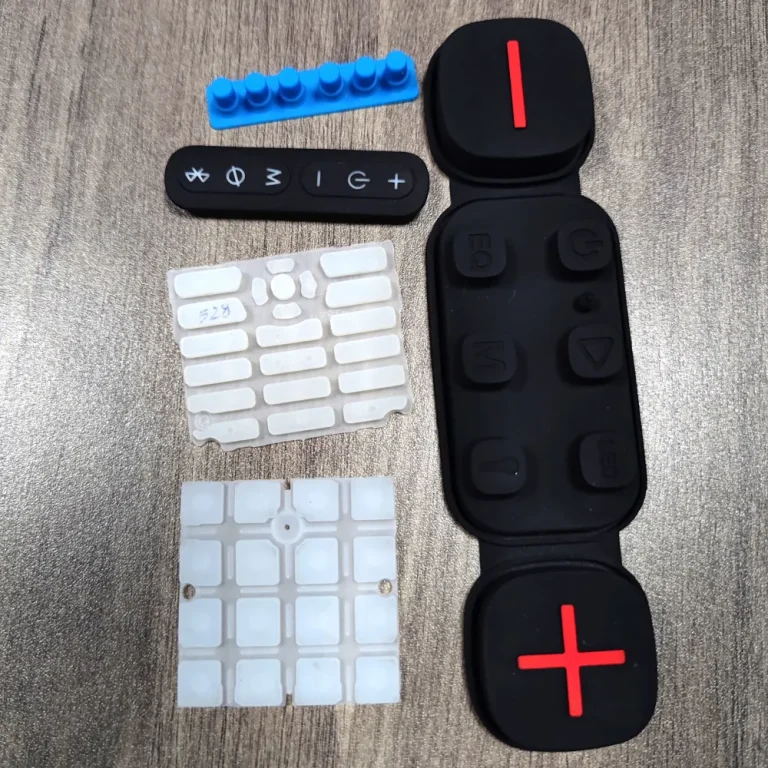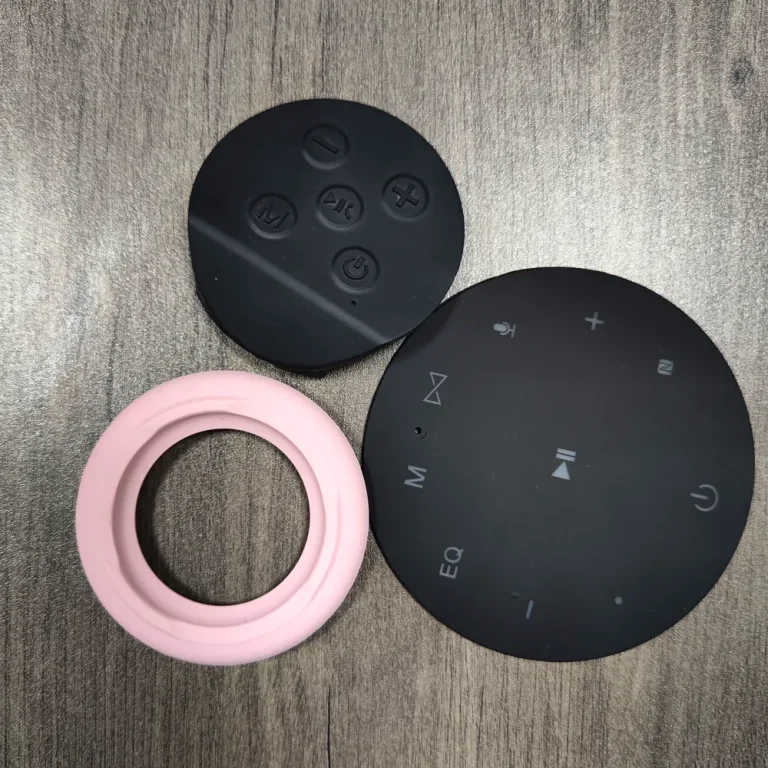
Scope and common interpretation errors
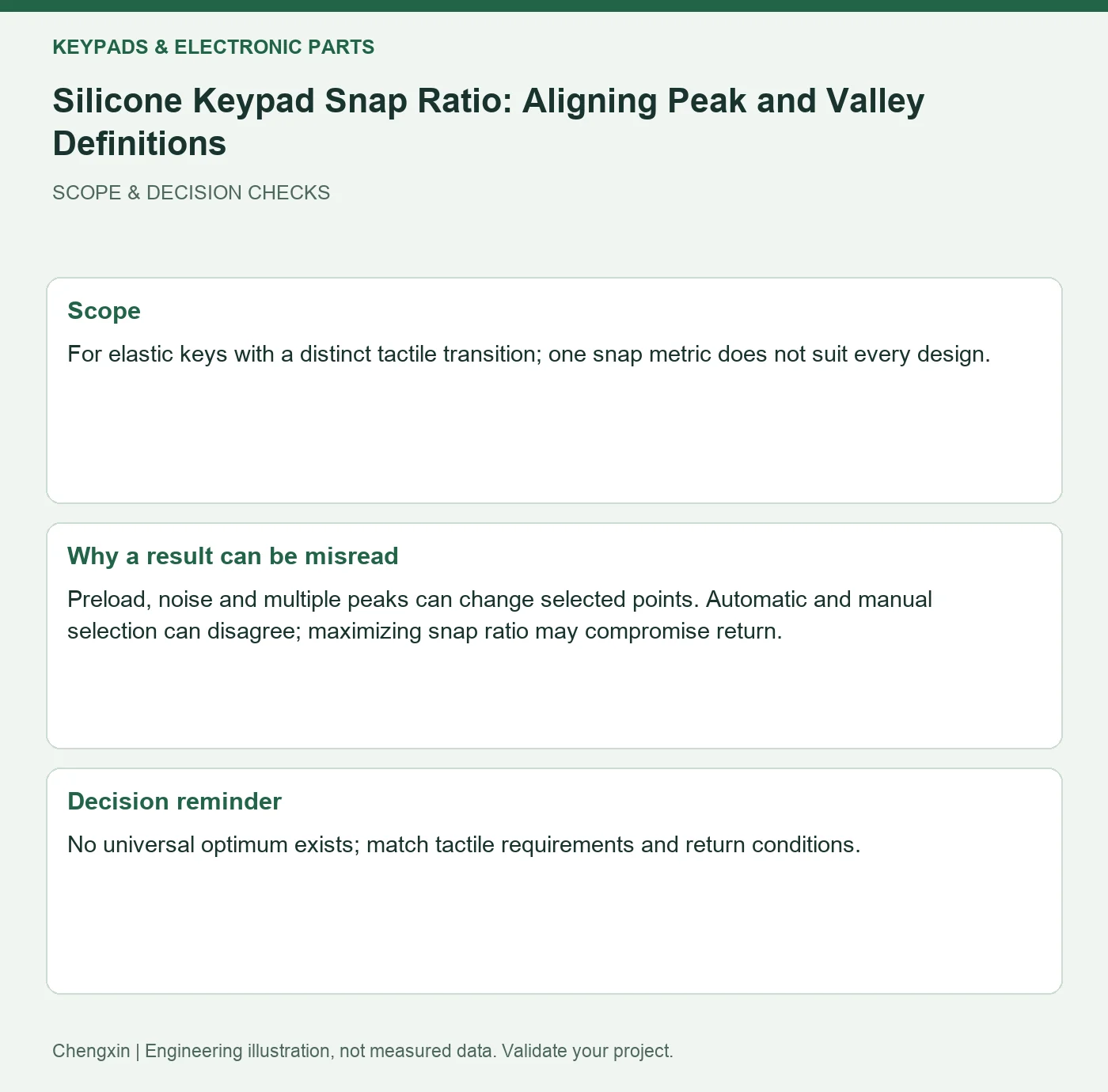
For elastic keys with a distinct tactile transition; one snap metric does not suit every design.
Preload, noise and multiple peaks can change selected points. Automatic and manual selection can disagree; maximizing snap ratio may compromise return.
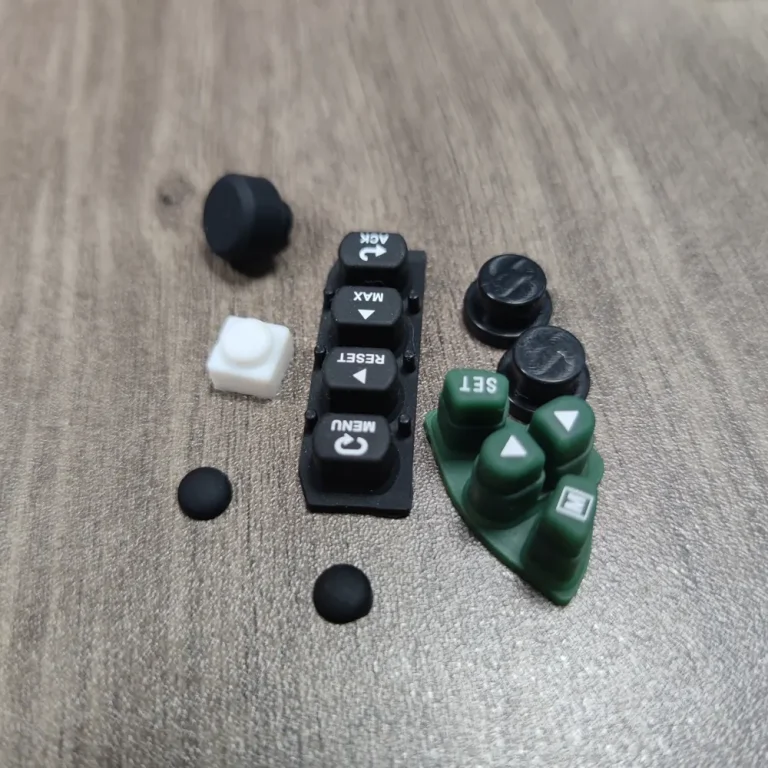
Turn the review into recorded checks
| Step | Action and evidence |
|---|---|
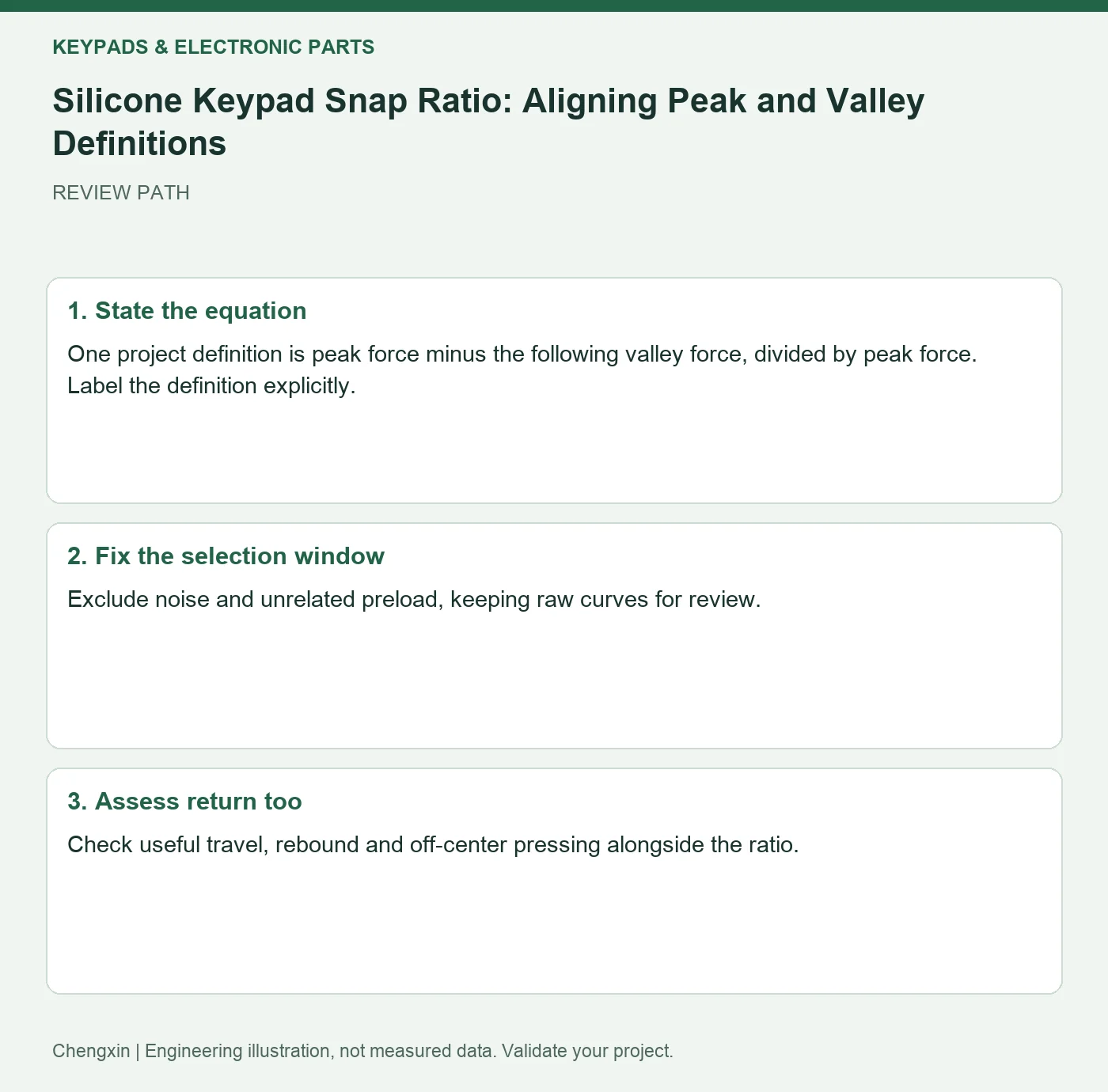
| 1 · State the equation | One project definition is peak force minus the following valley force, divided by peak force. Label the definition explicitly. |
| 2 · Fix the selection window | Exclude noise and unrelated preload, keeping raw curves for review. |
| 3 · Assess return too | Check useful travel, rebound and off-center pressing alongside the ratio. |
A comparison to avoid misinterpretation
If laboratories calculate different ratios from the same curve, exchange selected-point screenshots and formulas before altering tooling to pursue inconsistent targets.
Frequently asked question
Is a higher snap ratio always better?
No universal optimum exists; match tactile requirements and return conditions.
Background and further reading
This note addresses one specific question. For broader concepts, see the related background guide.
Related question: Conductive Silicone Key Contact Resistance: Pressure and Electrodes.
External references support the relevant concepts. The review steps and scenarios are independent engineering discussion guidance, not quotations from a standard or external organization. Use agreed methods, applicable document revisions and complete conditions.
Apply this to your custom part
Compare the structure with Custom Silicone Single-Key Button Caps. Describe the application, geometry, operating conditions, quantity and problem to solve. Submit a custom-parts inquiry, or see how to send drawings and sample photographs by business email. Confirm material, dimensions, costs, testing and delivery requirements for the project.