Scope and common interpretation errors
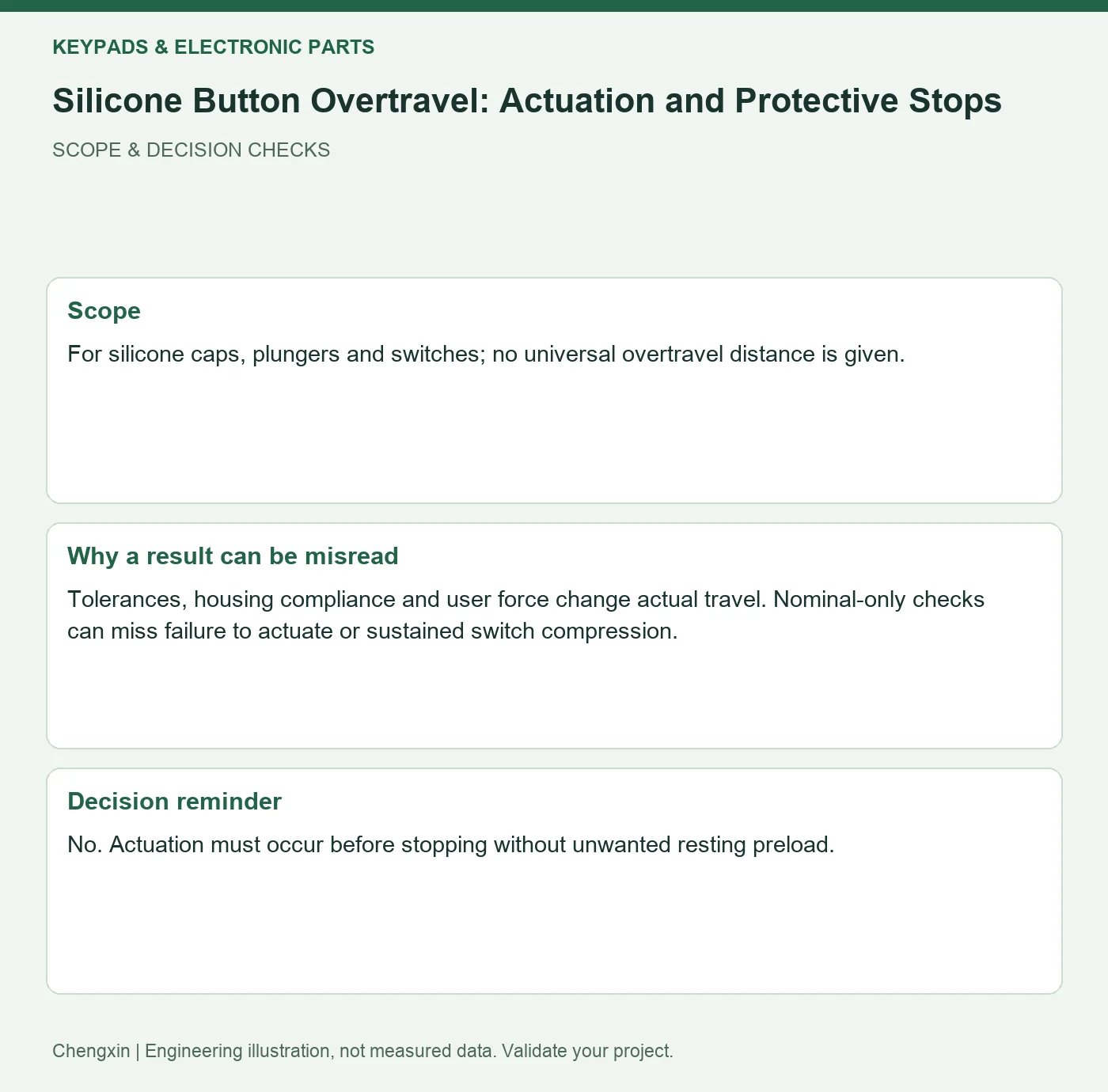
For silicone caps, plungers and switches; no universal overtravel distance is given.
Tolerances, housing compliance and user force change actual travel. Nominal-only checks can miss failure to actuate or sustained switch compression.
Turn the review into recorded checks
| Step | Action and evidence |
|---|---|
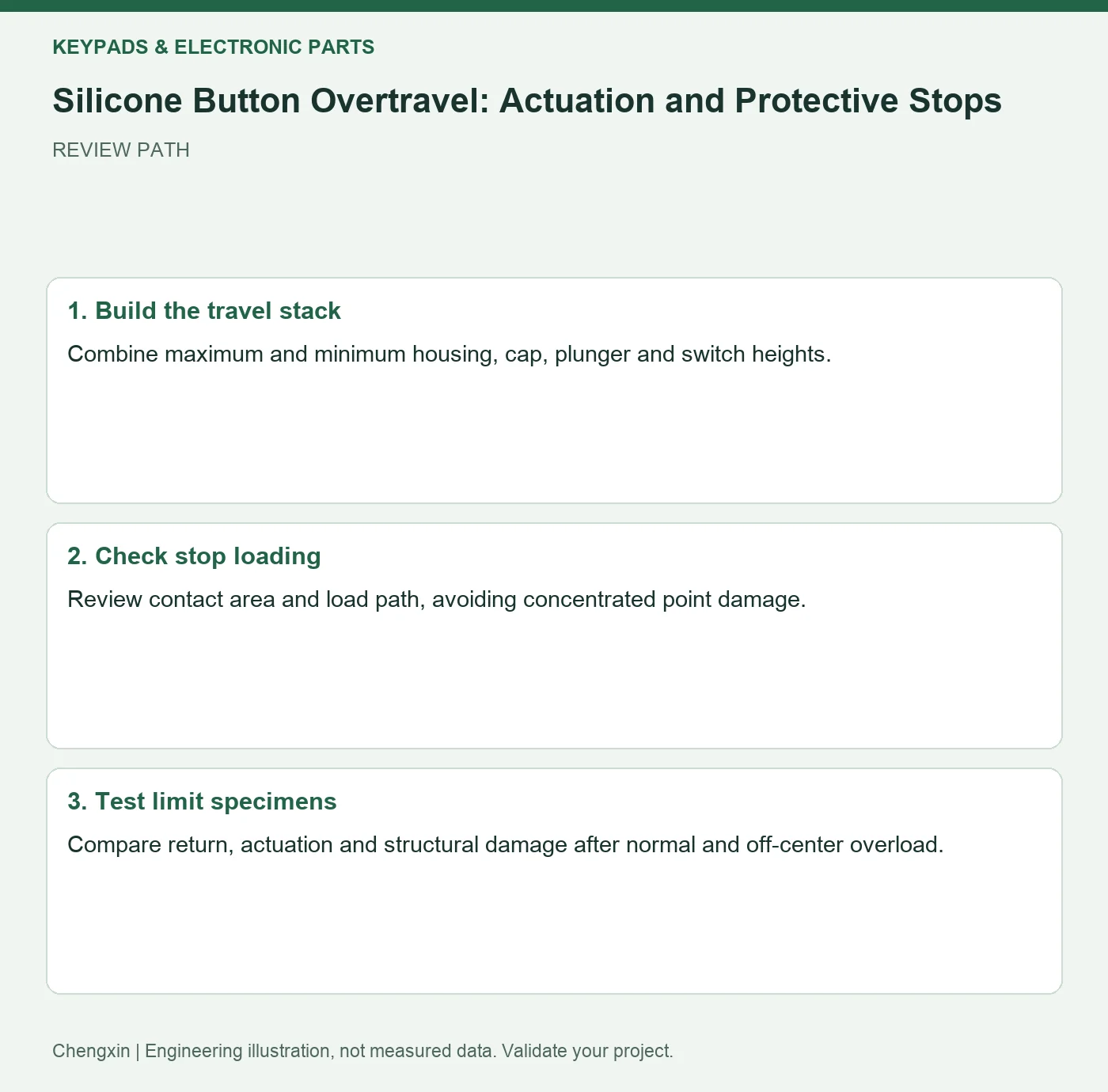
| 1 · Build the travel stack | Combine maximum and minimum housing, cap, plunger and switch heights. |
| 2 · Check stop loading | Review contact area and load path, avoiding concentrated point damage. |
| 3 · Test limit specimens | Compare return, actuation and structural damage after normal and off-center overload. |
A comparison to avoid misinterpretation
If the button sinks further after actuation, establish where the extra load goes before raising its plunger, which might also introduce constant preload.
Frequently asked question
Do hard stops eliminate rubber tolerances?
No. Actuation must occur before stopping without unwanted resting preload.
Background and further reading
This note addresses one specific question. For broader concepts, see the related background guide.
Related question: Button Rattle Versus Binding: Clearance, Guidance and Friction.
External references support the relevant concepts. The review steps and scenarios are independent engineering discussion guidance, not quotations from a standard or external organization. Use agreed methods, applicable document revisions and complete conditions.
Apply this to your custom part
Compare the structure with Custom Silicone Single-Key Button Caps. Describe the application, geometry, operating conditions, quantity and problem to solve. Submit a custom-parts inquiry, or see how to send drawings and sample photographs by business email. Confirm material, dimensions, costs, testing and delivery requirements for the project.