Scope and common interpretation errors
For small-equipment isolation pads and bumpers, without promised isolation or safe load ratings.
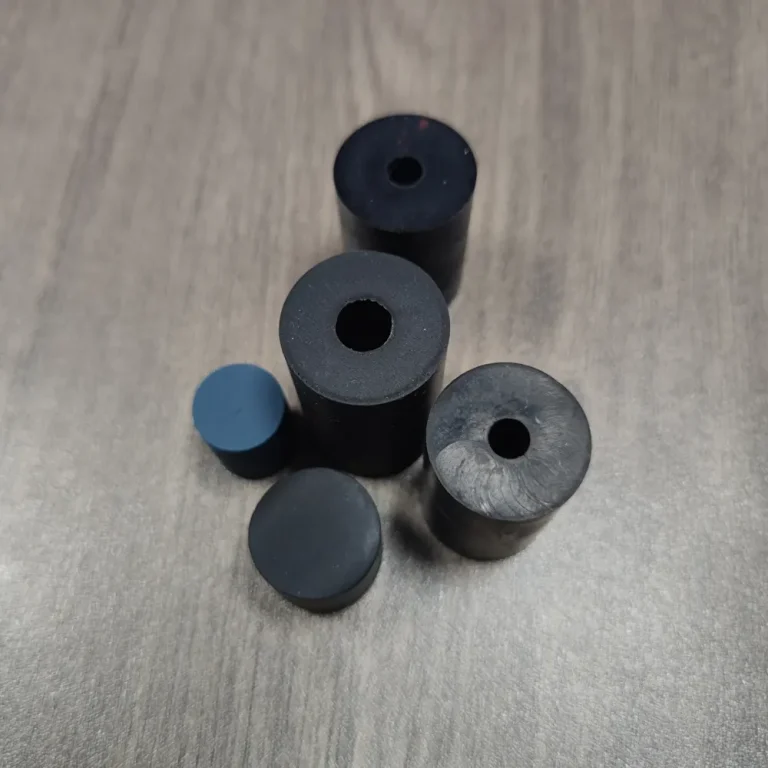
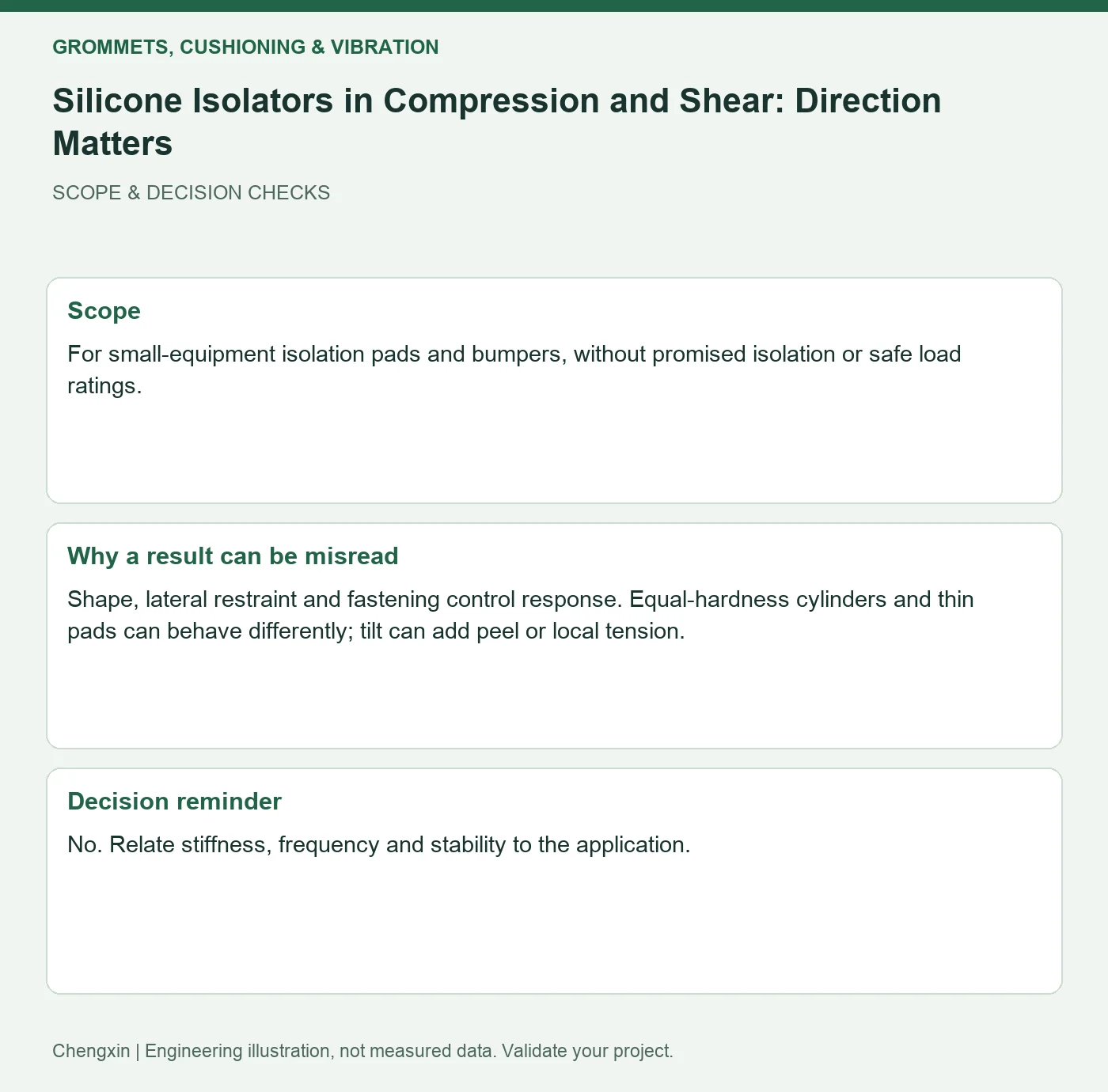
Shape, lateral restraint and fastening control response. Equal-hardness cylinders and thin pads can behave differently; tilt can add peel or local tension.
Turn the review into recorded checks
| Step | Action and evidence |
|---|---|
| 1 · Draw load directions | Separate gravity, vibration and external operating forces. |
| 2 · Measure by direction | Record force and displacement in compression, lateral motion or combined loading. |
| 3 · Review fixing boundaries | Check for fastener bypass paths and retest complete-unit motion and interference. |
A comparison to avoid misinterpretation
A pad stiff axially but compliant laterally may help one direction and destabilize another. Validate its actual mounting orientation.
Frequently asked question
Does softer material isolate better in every direction?
No. Relate stiffness, frequency and stability to the application.
Background and further reading
This note addresses one specific question. For broader concepts, see the related background guide.
Related question: Vibration Persists with Rubber Pads: Rigid Fastener Bypass Paths.
External references support the relevant concepts. The review steps and scenarios are independent engineering discussion guidance, not quotations from a standard or external organization. Use agreed methods, applicable document revisions and complete conditions.
Apply this to your custom part
Compare the structure with Silicone Vibration-Isolation Feet for Small Equipment. Describe the application, geometry, operating conditions, quantity and problem to solve. Submit a custom-parts inquiry, or see how to send drawings and sample photographs by business email. Confirm material, dimensions, costs, testing and delivery requirements for the project.