Scope and common interpretation errors
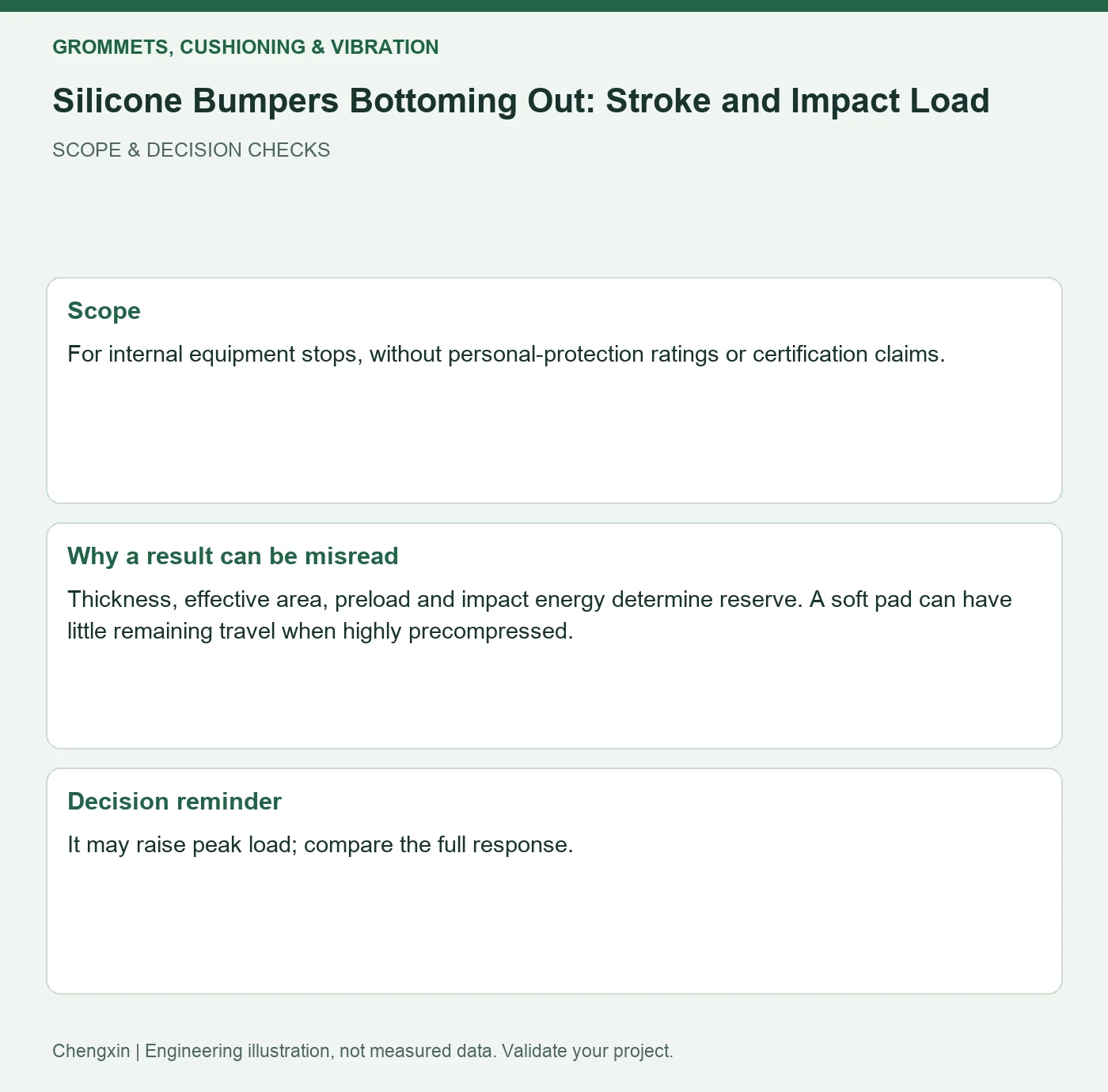
For internal equipment stops, without personal-protection ratings or certification claims.
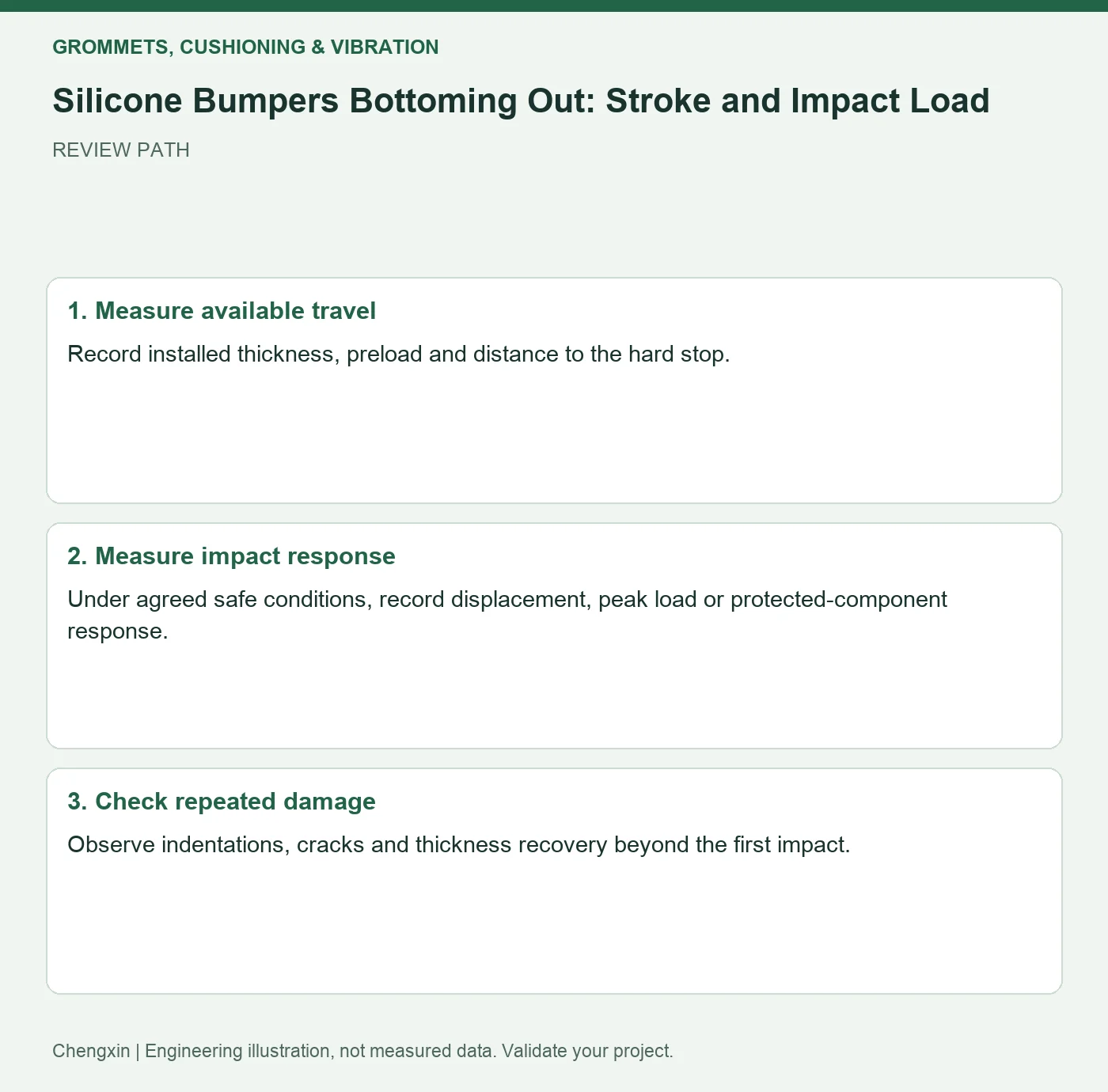
Thickness, effective area, preload and impact energy determine reserve. A soft pad can have little remaining travel when highly precompressed.
Turn the review into recorded checks
| Step | Action and evidence |
|---|---|
| 1 · Measure available travel | Record installed thickness, preload and distance to the hard stop. |
| 2 · Measure impact response | Under agreed safe conditions, record displacement, peak load or protected-component response. |
| 3 · Check repeated damage | Observe indentations, cracks and thickness recovery beyond the first impact. |
A comparison to avoid misinterpretation
A thicker specimen may reduce impact but cause assembly interference. Address space and structure rather than treating an uninstalled result as final.
Frequently asked question
Will greater hardness prevent bottoming out safely?
It may raise peak load; compare the full response.
Background and further reading
This note addresses one specific question. For broader concepts, see the related background guide.
Related question: Silicone Foot Grip on Different Surfaces: Contact and Contamination.
External references support the relevant concepts. The review steps and scenarios are independent engineering discussion guidance, not quotations from a standard or external organization. Use agreed methods, applicable document revisions and complete conditions.
Apply this to your custom part
Compare the structure with Silicone Vibration-Isolation Feet for Small Equipment. Describe the application, geometry, operating conditions, quantity and problem to solve. Submit a custom-parts inquiry, or see how to send drawings and sample photographs by business email. Confirm material, dimensions, costs, testing and delivery requirements for the project.