Scope and common interpretation errors
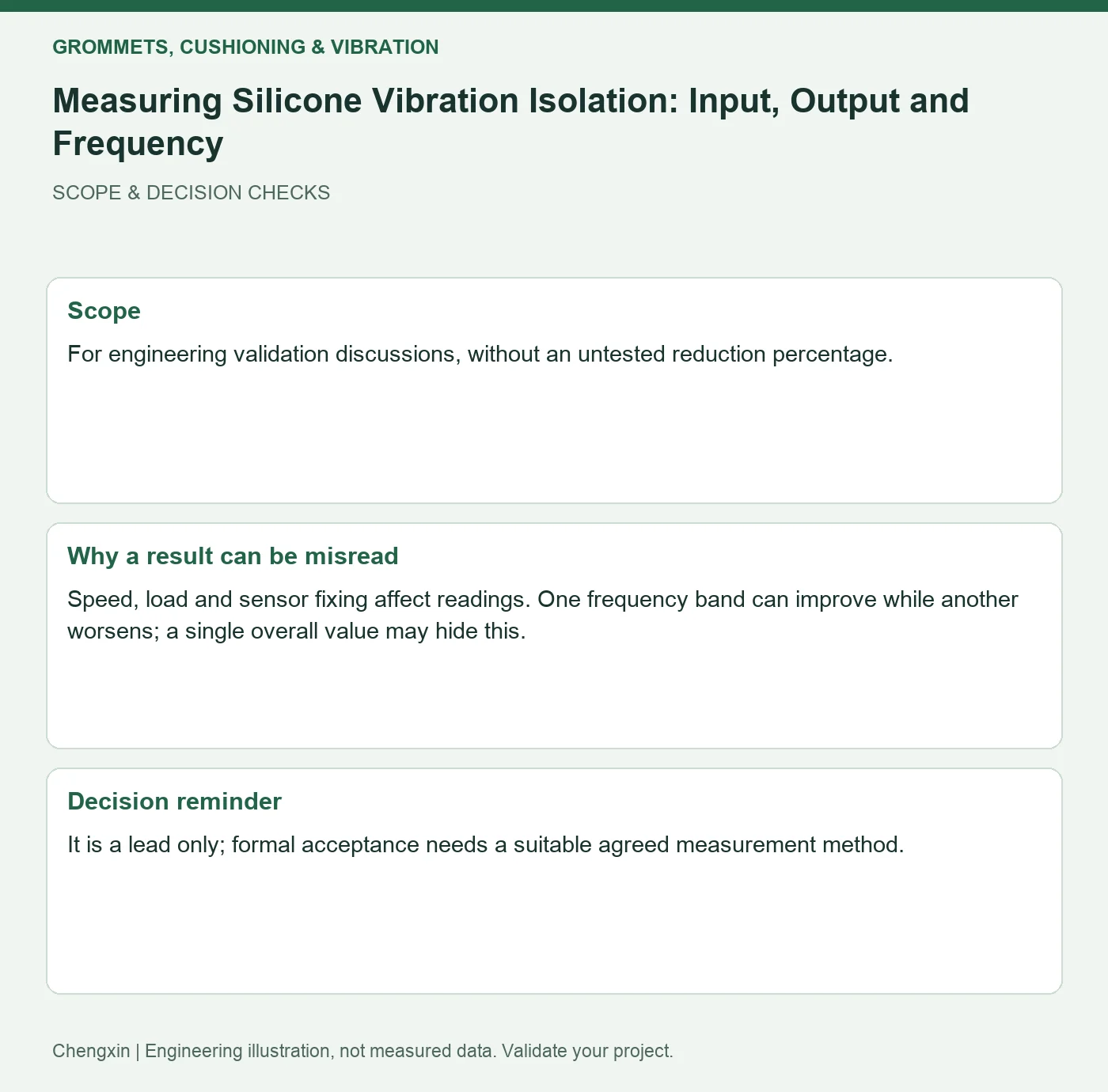
For engineering validation discussions, without an untested reduction percentage.
Speed, load and sensor fixing affect readings. One frequency band can improve while another worsens; a single overall value may hide this.
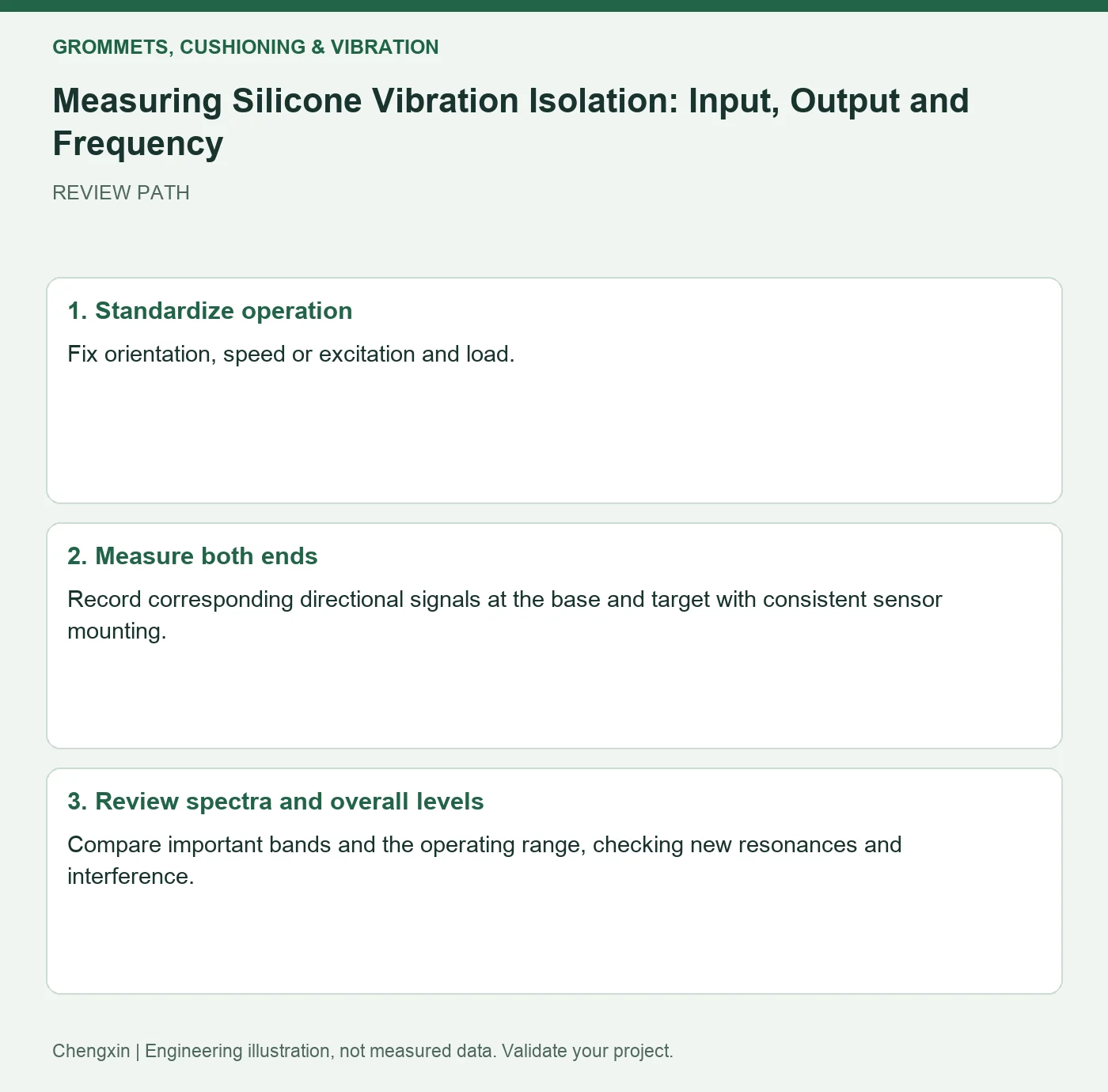
Turn the review into recorded checks
| Step | Action and evidence |
|---|---|
| 1 · Standardize operation | Fix orientation, speed or excitation and load. |
| 2 · Measure both ends | Record corresponding directional signals at the base and target with consistent sensor mounting. |
| 3 · Review spectra and overall levels | Compare important bands and the operating range, checking new resonances and interference. |
A comparison to avoid misinterpretation
A lower overall value accompanied by increased noise at one speed calls for investigation of that band, not reporting only favorable low-speed data.
Frequently asked question
Can one phone vibration reading qualify isolation?
It is a lead only; formal acceptance needs a suitable agreed measurement method.
Background and further reading
This note addresses one specific question. For broader concepts, see the related background guide.
Related question: Silicone Bumpers Bottoming Out: Stroke and Impact Load.
External references support the relevant concepts. The review steps and scenarios are independent engineering discussion guidance, not quotations from a standard or external organization. Use agreed methods, applicable document revisions and complete conditions.
Apply this to your custom part
Compare the structure with Silicone Vibration-Isolation Feet for Small Equipment. Describe the application, geometry, operating conditions, quantity and problem to solve. Submit a custom-parts inquiry, or see how to send drawings and sample photographs by business email. Confirm material, dimensions, costs, testing and delivery requirements for the project.