Scope and common interpretation errors
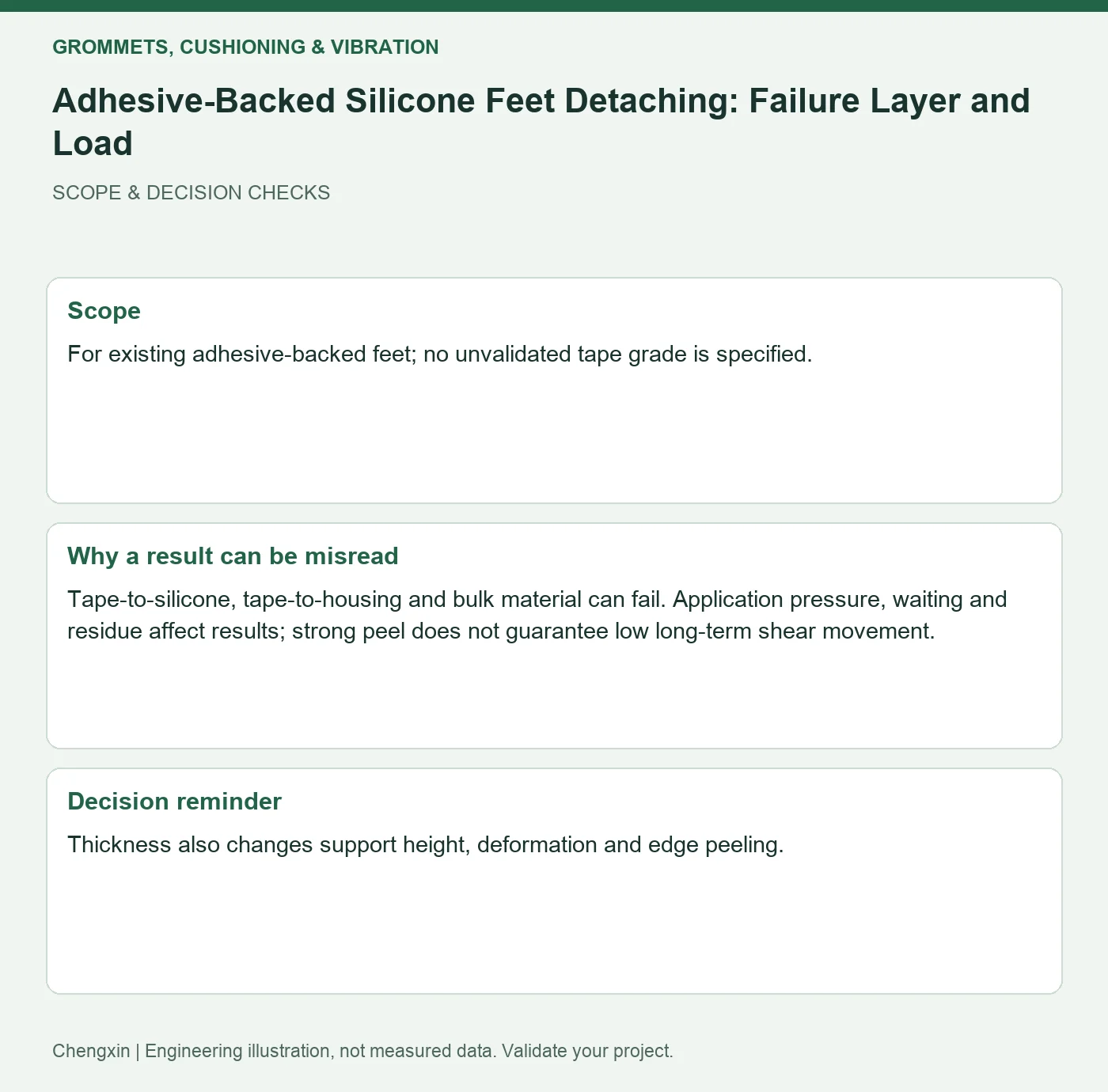
For existing adhesive-backed feet; no unvalidated tape grade is specified.
Tape-to-silicone, tape-to-housing and bulk material can fail. Application pressure, waiting and residue affect results; strong peel does not guarantee low long-term shear movement.
Turn the review into recorded checks
| Step | Action and evidence |
|---|---|
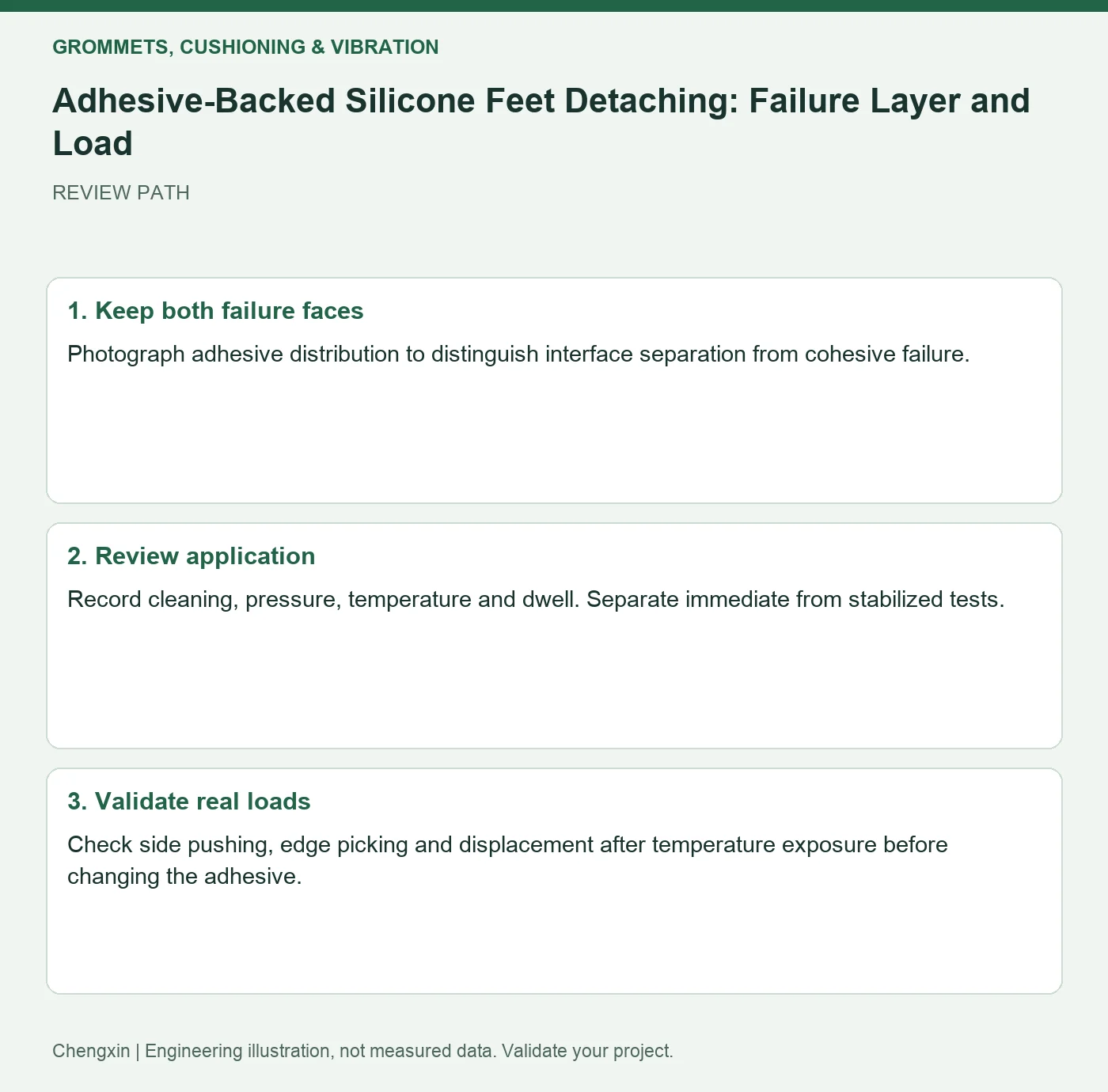
| 1 · Keep both failure faces | Photograph adhesive distribution to distinguish interface separation from cohesive failure. |
| 2 · Review application | Record cleaning, pressure, temperature and dwell. Separate immediate from stabilized tests. |
| 3 · Validate real loads | Check side pushing, edge picking and displacement after temperature exposure before changing the adhesive. |
A comparison to avoid misinterpretation
A clean housing face with adhesive remaining on the foot suggests checking housing preparation, while allowing for changes caused by removal itself.
Frequently asked question
Will thicker tape solve detachment?
Thickness also changes support height, deformation and edge peeling.
Background and further reading
This note addresses one specific question. For broader concepts, see the related background guide.
Related question: Silicone Grommet Retention in Sheet Metal: Groove and Panel Thickness.
External references support the relevant concepts. The review steps and scenarios are independent engineering discussion guidance, not quotations from a standard or external organization. Use agreed methods, applicable document revisions and complete conditions.
Apply this to your custom part
Compare the structure with Silicone Vibration-Isolation Feet for Small Equipment. Describe the application, geometry, operating conditions, quantity and problem to solve. Submit a custom-parts inquiry, or see how to send drawings and sample photographs by business email. Confirm material, dimensions, costs, testing and delivery requirements for the project.