Scope and common interpretation errors
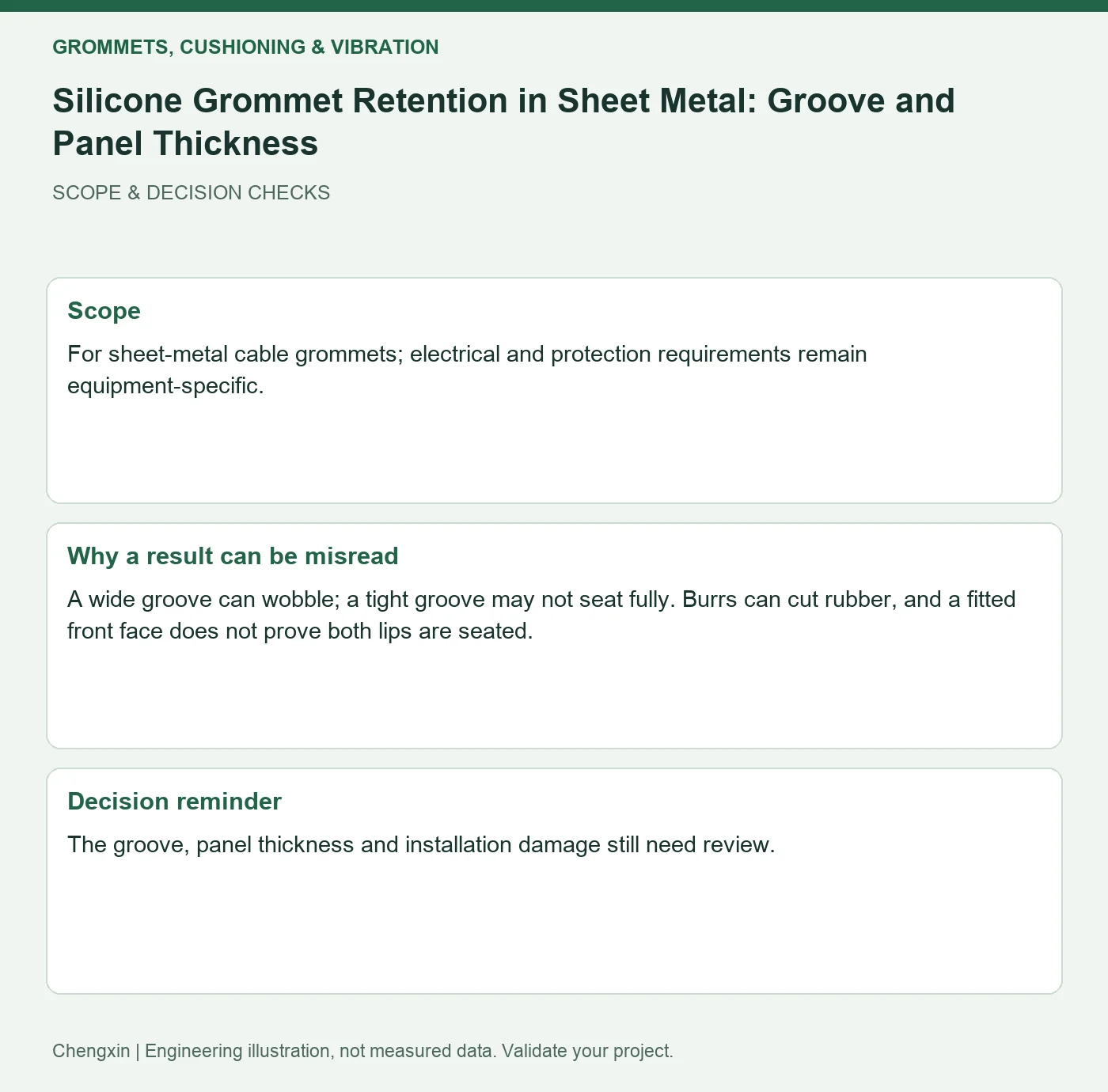
For sheet-metal cable grommets; electrical and protection requirements remain equipment-specific.
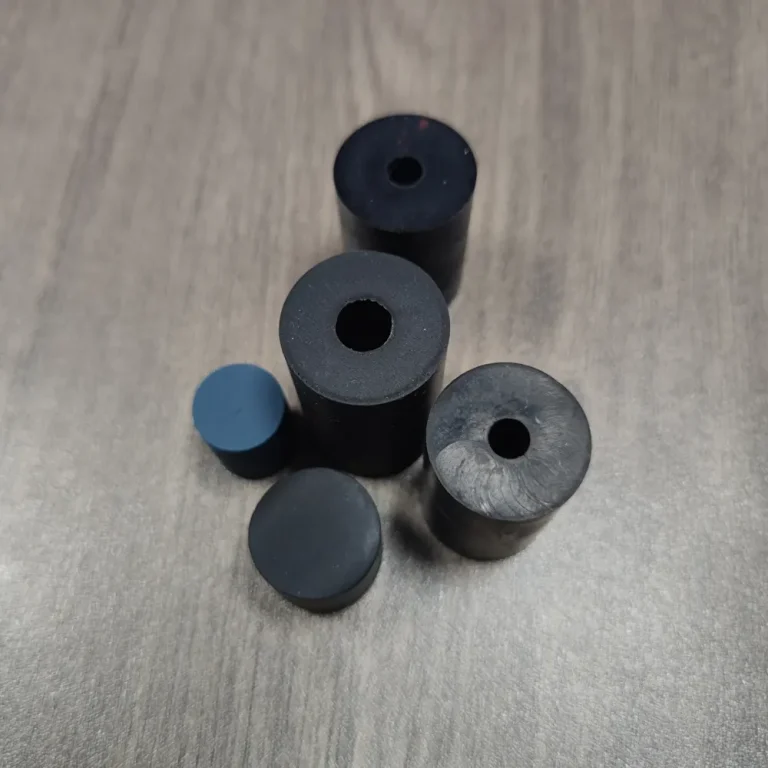
A wide groove can wobble; a tight groove may not seat fully. Burrs can cut rubber, and a fitted front face does not prove both lips are seated.
Turn the review into recorded checks
| Step | Action and evidence |
|---|---|
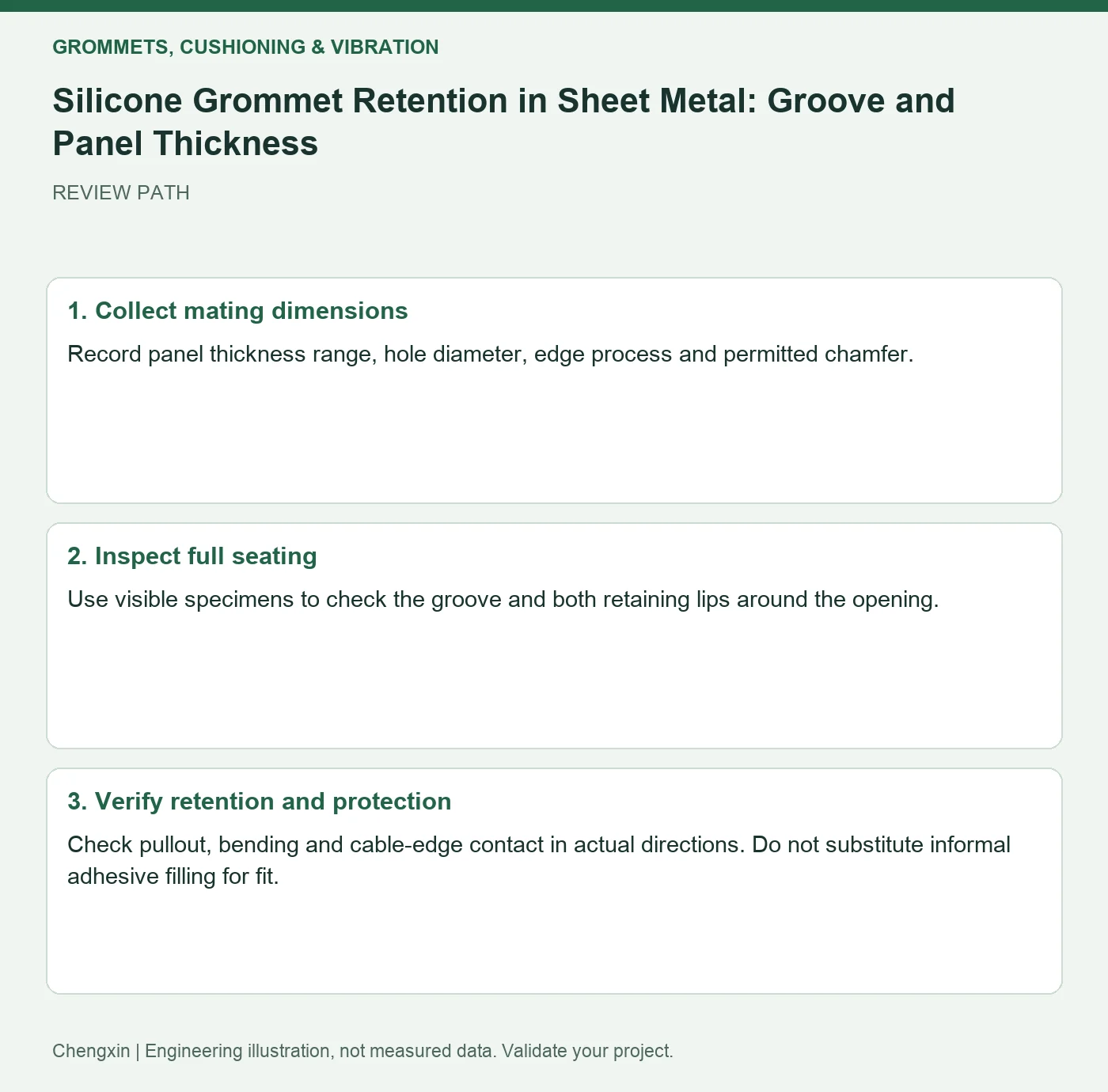
| 1 · Collect mating dimensions | Record panel thickness range, hole diameter, edge process and permitted chamfer. |
| 2 · Inspect full seating | Use visible specimens to check the groove and both retaining lips around the opening. |
| 3 · Verify retention and protection | Check pullout, bending and cable-edge contact in actual directions. Do not substitute informal adhesive filling for fit. |
A comparison to avoid misinterpretation
A grommet loose on thin panels and difficult on thick ones needs an explicit coverage range or separate sizes, not one nominal thickness.
Frequently asked question
Will a larger outside diameter ensure retention?
The groove, panel thickness and installation damage still need review.
Background and further reading
This note addresses one specific question. For broader concepts, see the related background guide.
Related question: Cable Breaks Despite a Silicone Boot: Bend Transition and Strain Relief.
External references support the relevant concepts. The review steps and scenarios are independent engineering discussion guidance, not quotations from a standard or external organization. Use agreed methods, applicable document revisions and complete conditions.
Apply this to your custom part
Compare the structure with Custom Shaped Silicone Parts. Describe the application, geometry, operating conditions, quantity and problem to solve. Submit a custom-parts inquiry, or see how to send drawings and sample photographs by business email. Confirm material, dimensions, costs, testing and delivery requirements for the project.