Scope and common interpretation errors
For cavity-traceable data analysis, not a substitute for a complete capability study.
High and low groups can cancel in the mean while individuals remain out of tolerance. Mixed process stages also create hard-to-interpret distributions.
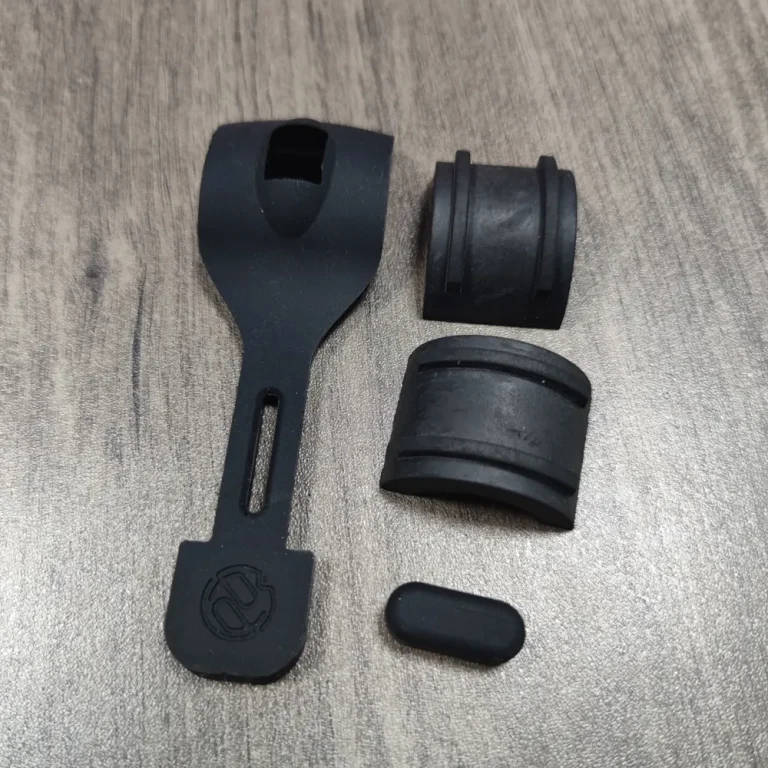
Turn the review into recorded checks
| Step | Action and evidence |
|---|---|
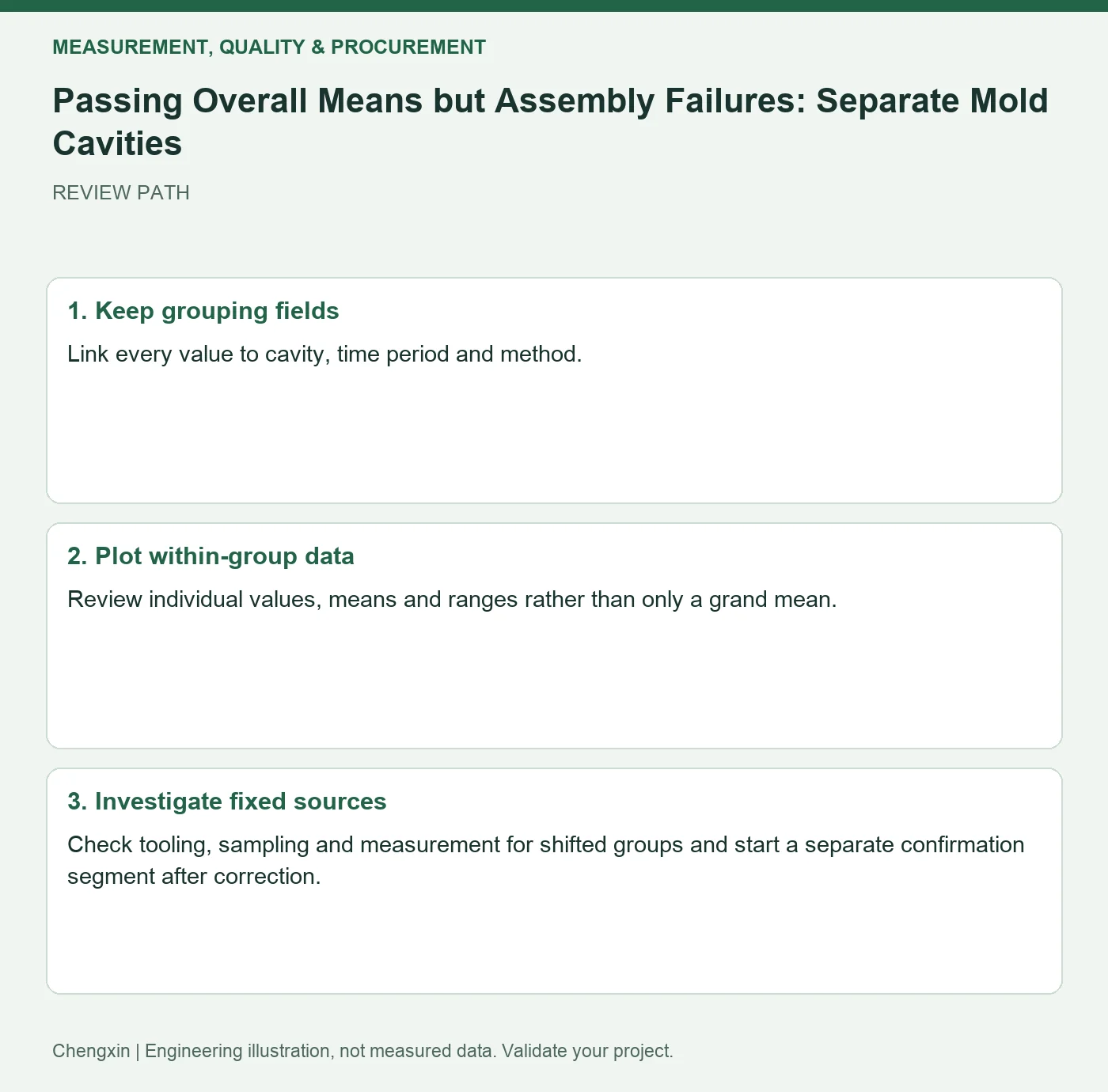
| 1 · Keep grouping fields | Link every value to cavity, time period and method. |
| 2 · Plot within-group data | Review individual values, means and ranges rather than only a grand mean. |
| 3 · Investigate fixed sources | Check tooling, sampling and measurement for shifted groups and start a separate confirmation segment after correction. |
A comparison to avoid misinterpretation
Two cavities near opposite limits can yield an attractive overall mean without proving either cavity stable. Validate them separately.
Frequently asked question
Can the worst cavity be excluded to improve the calculation?
Only a predefined evidence-based exclusion rule can justify removing data.
Background and further reading
This note addresses one specific question. For broader concepts, see the related background guide.
Related question: Conditioning Silicone Before Inspection: Temperature, Time and History.
External references support the relevant concepts. The review steps and scenarios are independent engineering discussion guidance, not quotations from a standard or external organization. Use agreed methods, applicable document revisions and complete conditions.
Apply this to your custom part
Compare the structure with Custom Shaped Silicone Parts. Describe the application, geometry, operating conditions, quantity and problem to solve. Submit a custom-parts inquiry, or see how to send drawings and sample photographs by business email. Confirm material, dimensions, costs, testing and delivery requirements for the project.