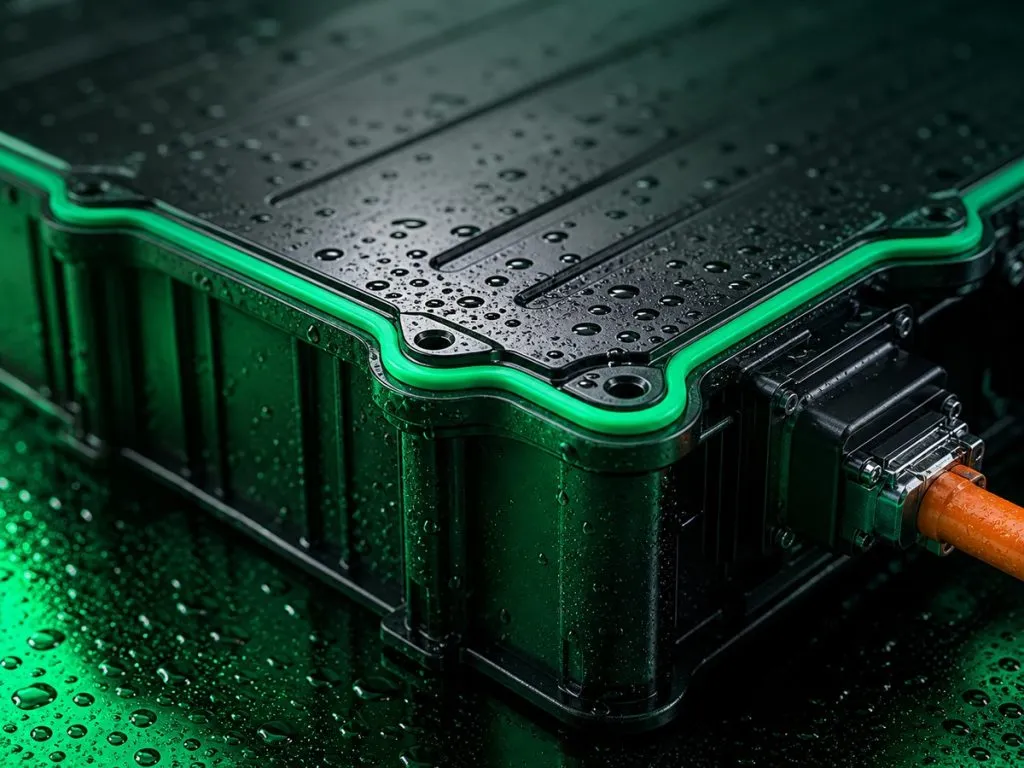
Battery pack seals must withstand operating conditions such as moisture, temperature cycling, vibration, and long-term compression. Material compliance, design redundancy, and validation of the entire battery pack should be advanced in parallel during the early stages of the project.
1. Define the environmental boundaries
The installation location determines the temperature, medium, and mechanical loads that the seal must withstand.
- Confirm the housing location, distance from the heat source, and external exposure
- Specify the Target Protection Level and Test Conditions
- List media that may come into contact with the system, such as coolants and cleaning agents
2. Materials and Flame Retardancy
Flame retardancy is only one factor; compression set and weather resistance should also be evaluated.
- Requirements for Supporting Documentation and Batch Traceability
- Verify flame-retardant performance at the actual thickness
- Testing Hardness, Elongation, and Rebound After Heat Aging
3. Seal Cross-Section Design
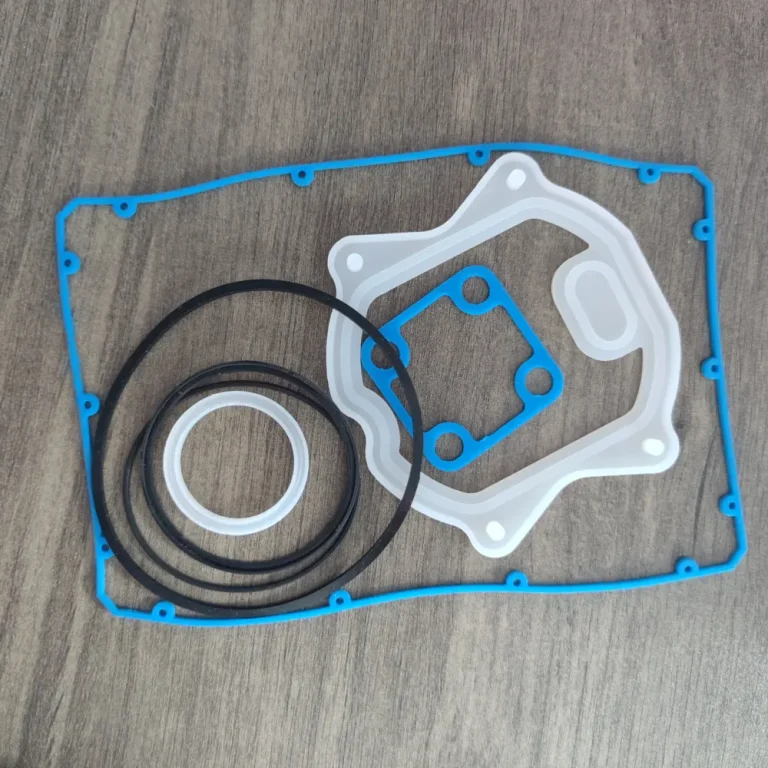
Large-size circumferential seals are easily affected by the flatness of the housing and the bolt spacing.
- Controlling Compression and Slot Fill Rate
- Use continuous arcs at corners to avoid weak points where sections meet.
- Evaluating the Uniformity of Forces in Bolts After Pre-tensioning
4. System-Level Verification
Ultimately, water resistance and durability must be verified in the assembled state, rather than by testing the materials alone.
- Perform spray, immersion, or airtightness tests
- Perform vibration and temperature cycling
- Inspect the disassembled unit for compression marks, misalignment, and cracks
FAQ
1. Does flame-retardant silicone necessarily compromise resilience?
Different formulations perform differently; the compression and sealing data after aging should be used to evaluate them based on the actual materials.
2. Can a single test replace the entire suite of tests?
No. Material testing is used for screening; only full-package testing can confirm tolerances and the actual risks after assembly.