
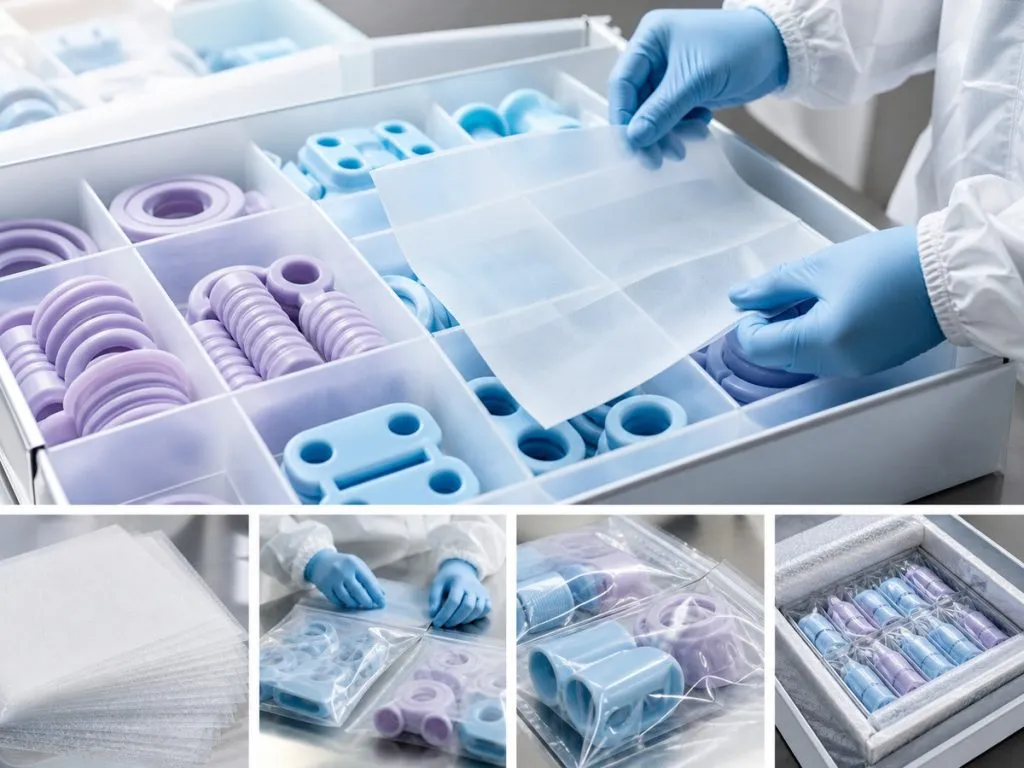
Issues such as particles, sticking, and indentations in silicone parts after shipment often stem from handling and packaging. Proper inner bags, separation, and labeling can help maintain the quality achieved during production.
1. Packaging Risks
Different products are susceptible to dust, pressure, or migration to varying degrees.
- Identifying Key Faces in a Geometric Model
- Classification of Cleanroom Levels
- Confirm Long-Distance Shipping Terms
2. Material Selection
The inner bag and release paper must not stick to or contaminate the silicone.
- Use materials with low migration
- Separated by light and dark colors
- Avoid contact with ink-coated surfaces
3. Method of Circulation
Avoid stacking thin walls and sealing surfaces on top of each other.
- Using a Positioning Tray
- Control the Number of Boxes Per Box
- Post "Do Not Step On" Signs
4. Shipment Traceability
Batch information allows for quick identification of anomalies.
- Mark Part Number
- Number of Records and Dates
- Retain Inspection Status
FAQ
1. Why do silicone parts stick together after packaging?
This may be related to surface conditions, migration from packaging materials, or high-temperature extrusion; storage simulations should be conducted.
2. Do all products require double packaging?
Decisions should be based on cleanliness and transportation risks to avoid unnecessary cost increases.