
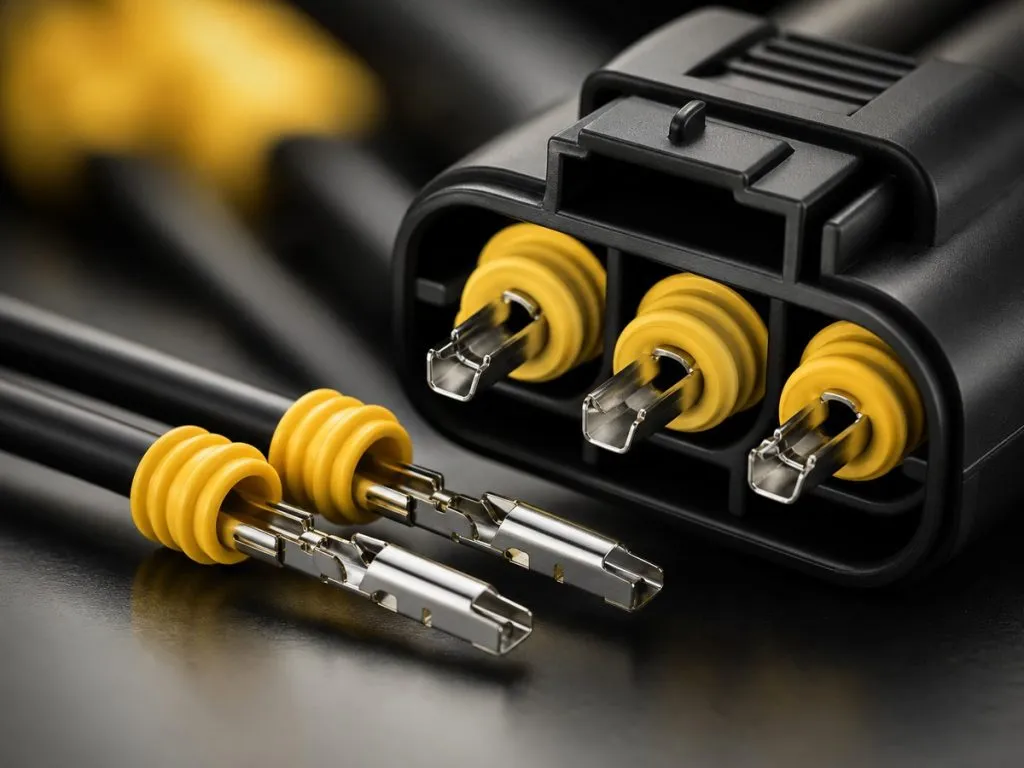
Seals in electrical connectors must maintain their waterproof performance during insertion and removal, under vibration, and through temperature fluctuations. The key factors are not only the O-ring itself, but also the pin holes, the housing, the tolerance chain, and assembly alignment.
1. First, check the seal location
Since face seals, bore seals, and cable seals are subjected to different types of forces, the compression and dimensional requirements should be defined separately for each.
- Identifying Static Sealing and Dynamic Insertion/Removal Areas
- Determining the Target Protection Level and Test Methods
- Drawing the Tolerance Chain for the Housing, Terminals, and Seals
2. Balancing Water Resistance and Insertion/Extraction Force
If the compression is too small, leaks may occur; if it is too large, it will increase the insertion and removal force and cause the seal to flip over.
- Calculate the initial compression based on the cross-section and groove
- Test the insertion force, extraction force, and holding force using prototype samples
- Avoid sharp edges around the terminals that could scratch the seals
3. Material and Appearance Control
Hardness, low-temperature rebound, and surface friction can affect assembly consistency.
- Selecting a Silicone Formulation Suitable for the Temperature Range and Medium
- Controlling Burrs, Flash, and Surface Roughness
- Evaluate the impact of lubrication or surface treatment on contact, as necessary
4. Reliability Verification
Testing after the entire machine has been assembled is the best way to identify tolerance and alignment issues.
- Perform immersion, spray, or airtightness tests
- Perform insertion/removal cycles, vibration tests, and temperature cycling
- Disassemble the unit to check whether the seals are misaligned, inverted, or damaged.
FAQ
1. Is the waterproof rating determined solely by the O-ring?
No. The enclosure fit, terminal holes, cable entry points, and the assembly process all affect the final protection rating.
2. Does the surface of the seal need to be lubricated?
Depends on the assembly force and materials; if a lubricant is used, its effects on electrical performance, sealing, and long-term stability should be verified.