Scope and common interpretation errors
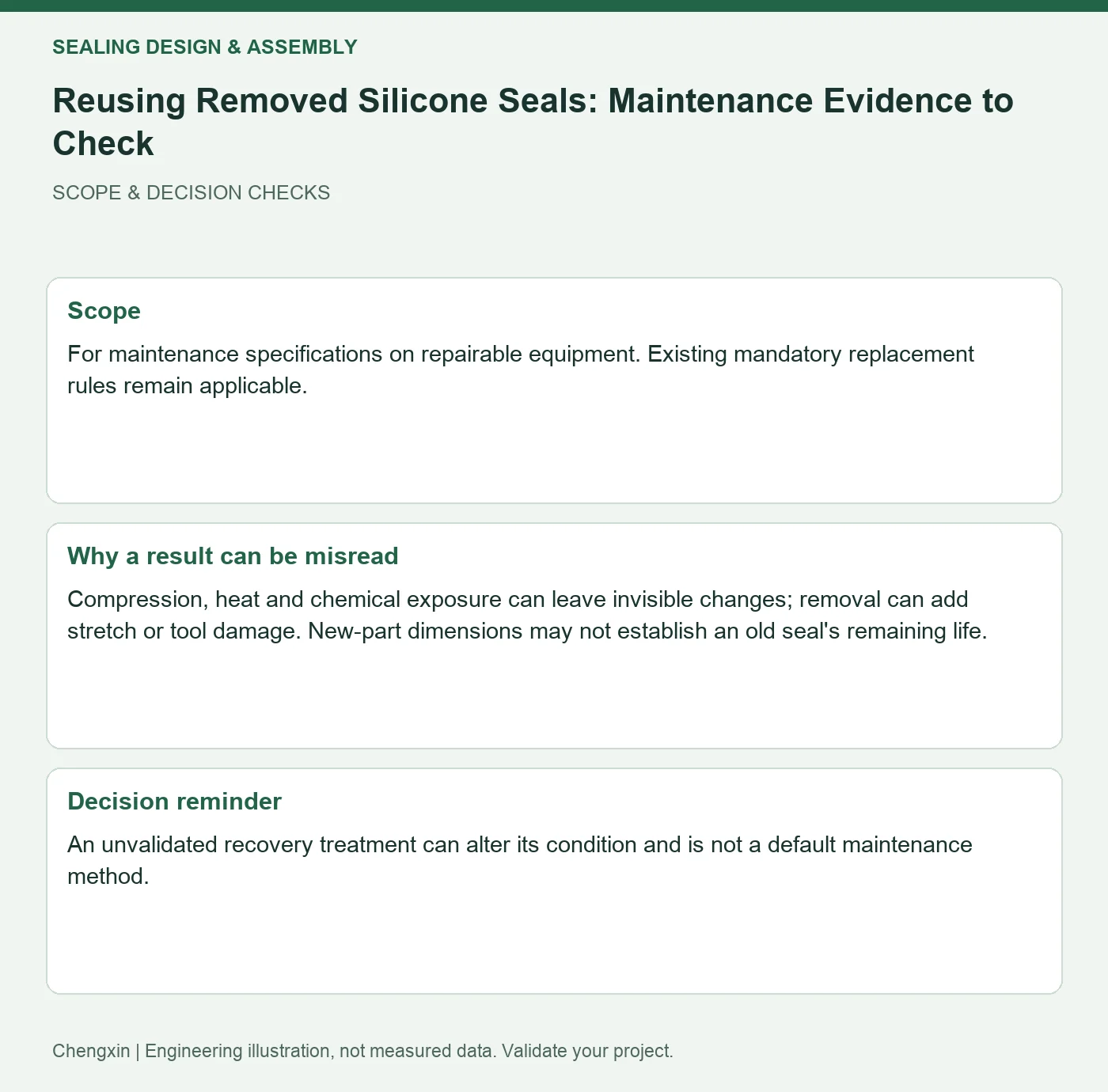
For maintenance specifications on repairable equipment. Existing mandatory replacement rules remain applicable.
Compression, heat and chemical exposure can leave invisible changes; removal can add stretch or tool damage. New-part dimensions may not establish an old seal's remaining life.

Turn the review into recorded checks
| Step | Action and evidence |
|---|---|
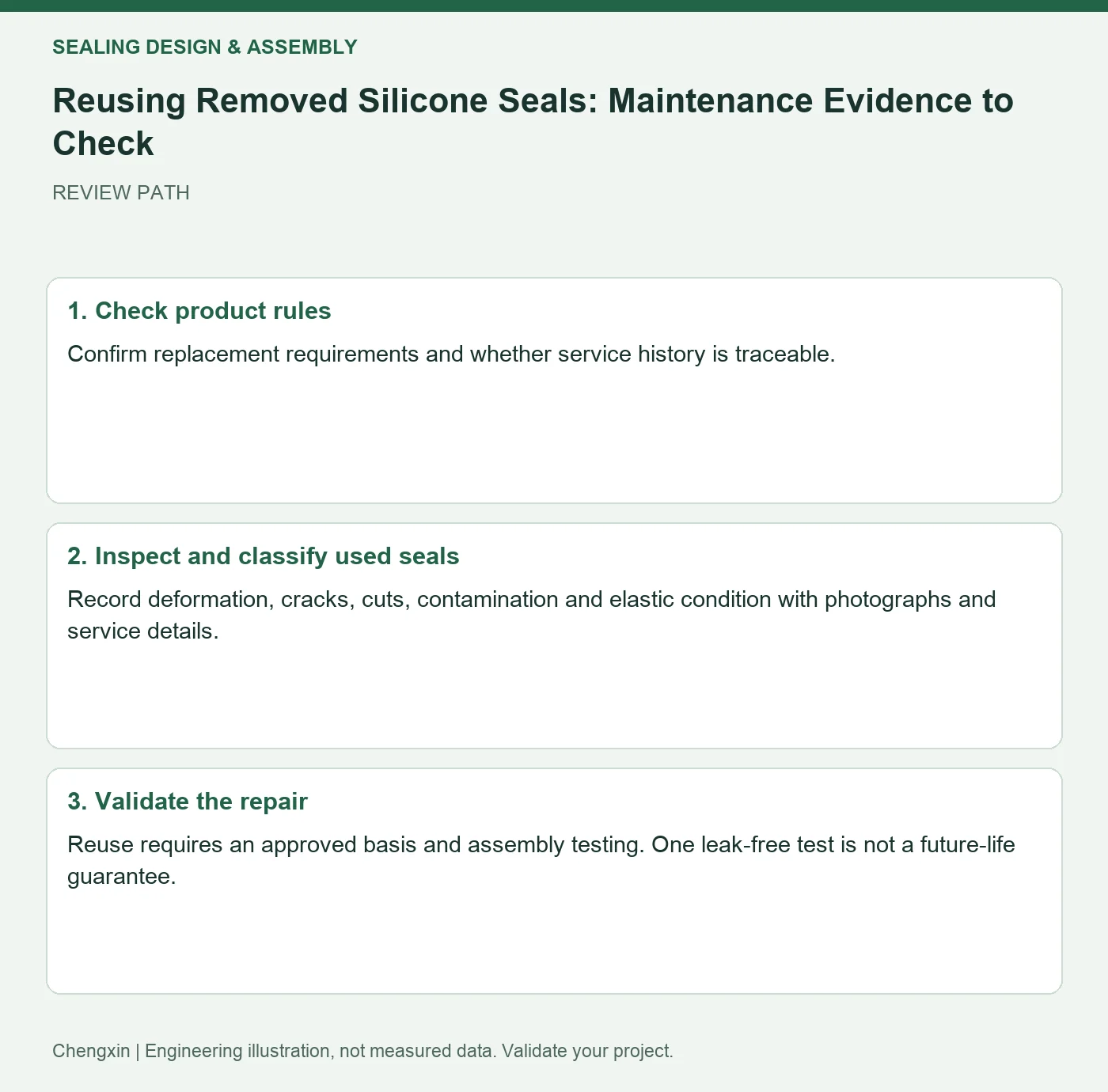
| 1 · Check product rules | Confirm replacement requirements and whether service history is traceable. |
| 2 · Inspect and classify used seals | Record deformation, cracks, cuts, contamination and elastic condition with photographs and service details. |
| 3 · Validate the repair | Reuse requires an approved basis and assembly testing. One leak-free test is not a future-life guarantee. |
A comparison to avoid misinterpretation
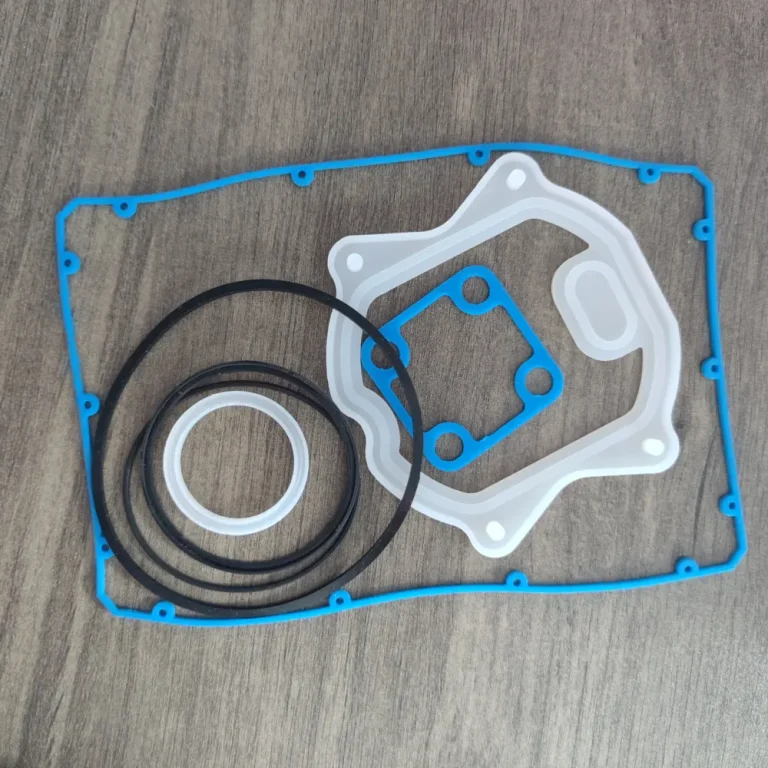
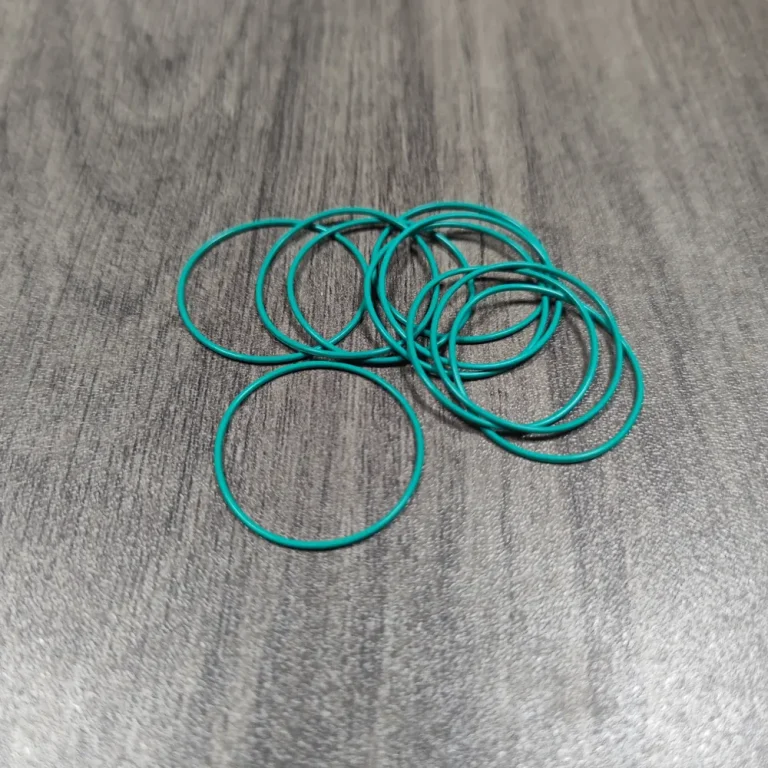
A never-used ring and a similar-looking ring removed after long compression must not share one accepted-material bin. Separate and label their origins.
Frequently asked question
Can boiling a used seal restore it for reuse?
An unvalidated recovery treatment can alter its condition and is not a default maintenance method.
Background and further reading
This note addresses one specific question. For broader concepts, see the related background guide.
Related question: Pressure-Decay Drift: Separating Leakage from Thermal Effects.
External references support the relevant concepts. The review steps and scenarios are independent engineering discussion guidance, not quotations from a standard or external organization. Use agreed methods, applicable document revisions and complete conditions.
Apply this to your custom part
Compare the structure with Precision Silicone O-Rings for Watches. Describe the application, geometry, operating conditions, quantity and problem to solve. Submit a custom-parts inquiry, or see how to send drawings and sample photographs by business email. Confirm material, dimensions, costs, testing and delivery requirements for the project.