Scope and common interpretation errors
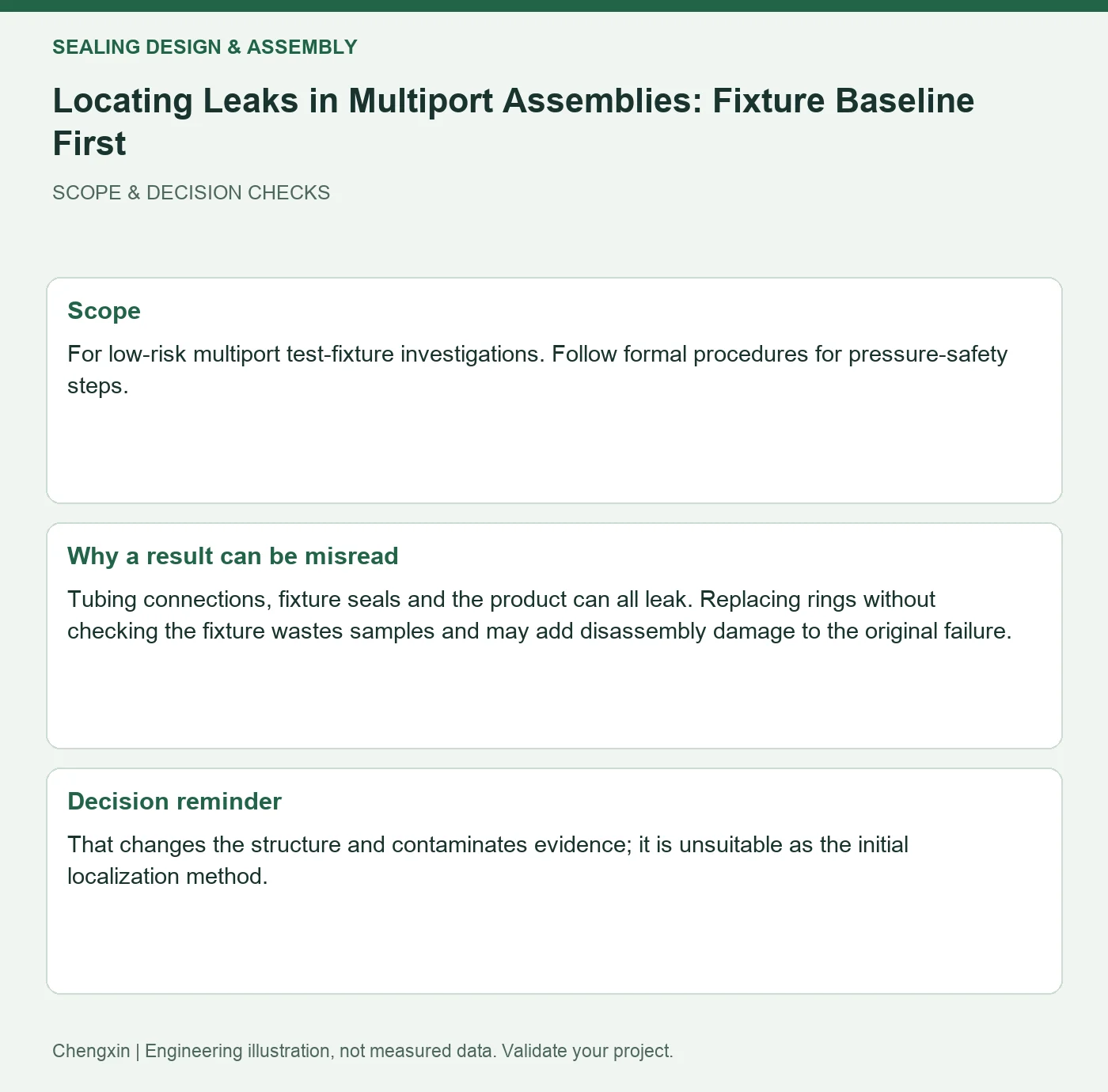
For low-risk multiport test-fixture investigations. Follow formal procedures for pressure-safety steps.
Tubing connections, fixture seals and the product can all leak. Replacing rings without checking the fixture wastes samples and may add disassembly damage to the original failure.
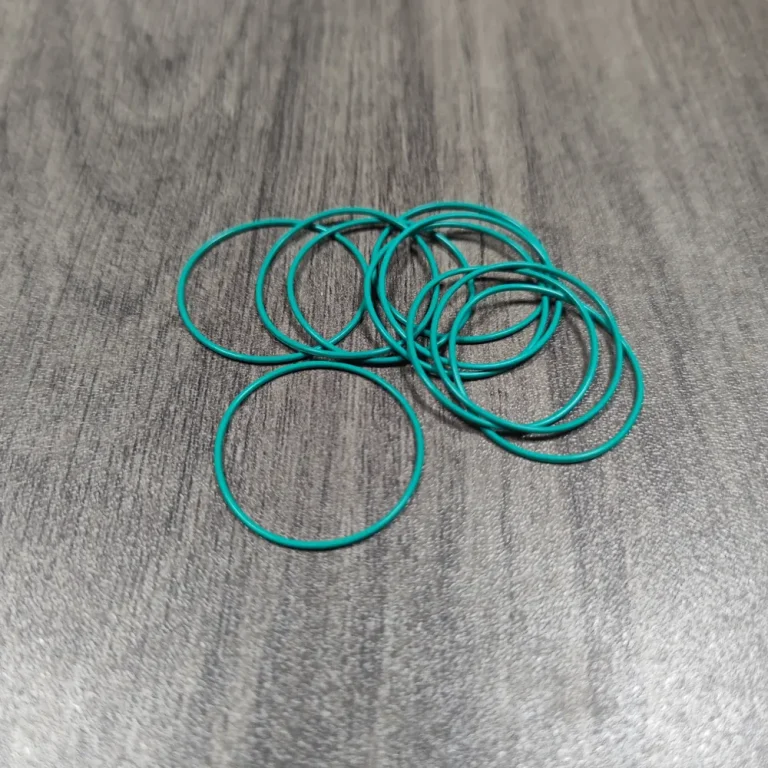
Turn the review into recorded checks
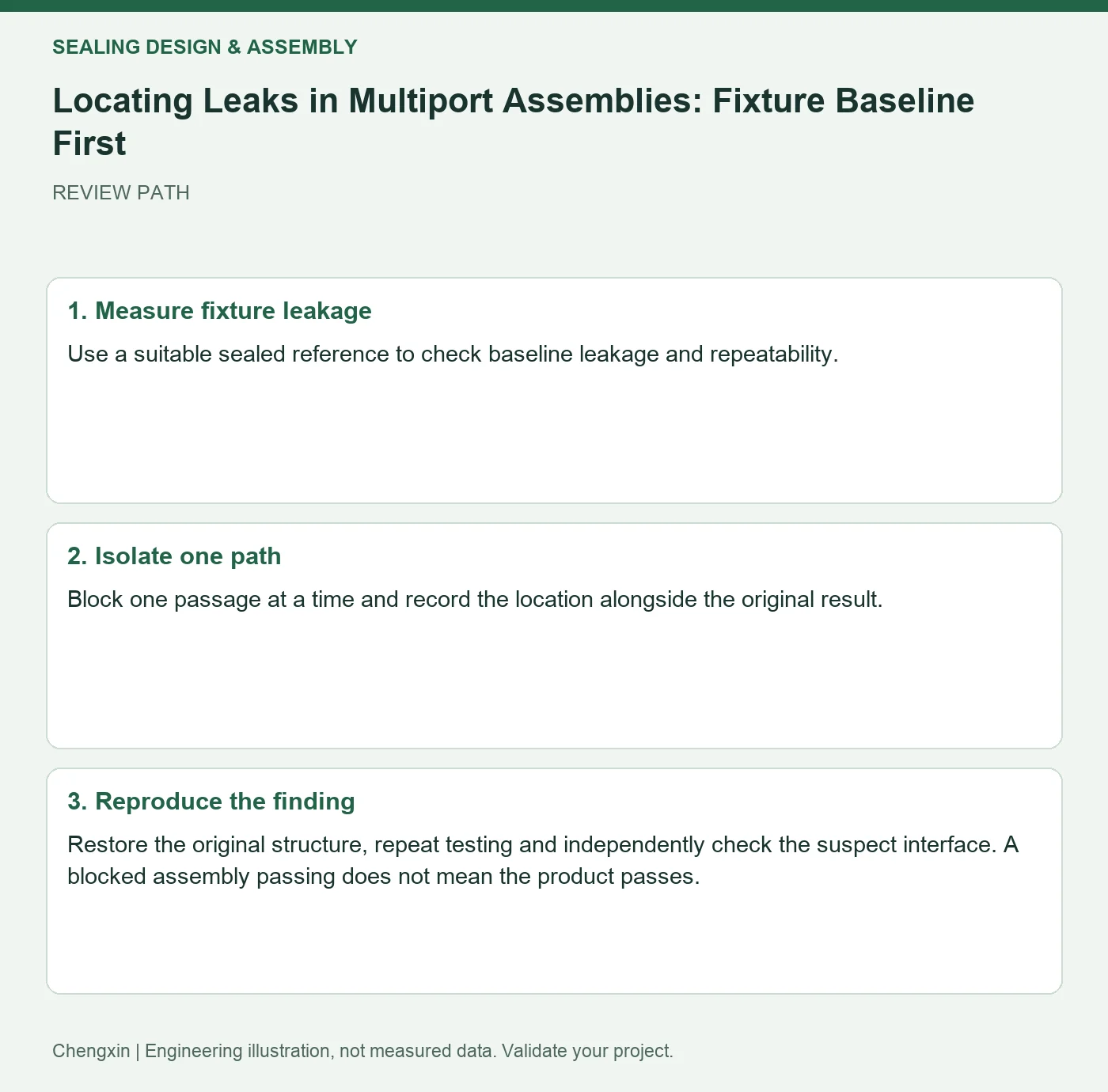
| Step | Action and evidence |
|---|---|
| 1 · Measure fixture leakage | Use a suitable sealed reference to check baseline leakage and repeatability. |
| 2 · Isolate one path | Block one passage at a time and record the location alongside the original result. |
| 3 · Reproduce the finding | Restore the original structure, repeat testing and independently check the suspect interface. A blocked assembly passing does not mean the product passes. |
A comparison to avoid misinterpretation
If similar fluctuations remain at the same connection after changing products, run the fixture reference repeatedly before attributing the issue to a recently received seal batch.
Frequently asked question
Should every interface be coated with sealant to find a leak?
That changes the structure and contaminates evidence; it is unsuitable as the initial localization method.
Background and further reading
This note addresses one specific question. For broader concepts, see the related background guide.
Related question: Seal-Surface Scratches: Direction and Contact-Band Location.
External references support the relevant concepts. The review steps and scenarios are independent engineering discussion guidance, not quotations from a standard or external organization. Use agreed methods, applicable document revisions and complete conditions.
Apply this to your custom part
Compare the structure with Rubber O-Rings for Cleaning-Equipment Water Circuits. Describe the application, geometry, operating conditions, quantity and problem to solve. Submit a custom-parts inquiry, or see how to send drawings and sample photographs by business email. Confirm material, dimensions, costs, testing and delivery requirements for the project.