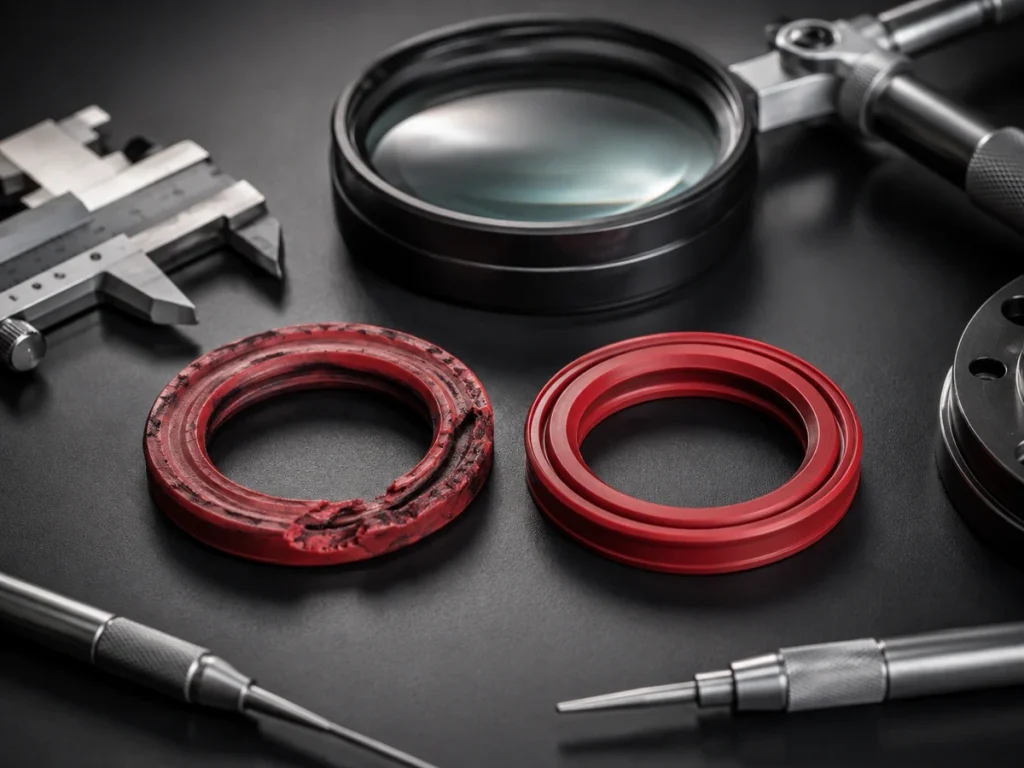
Short answer:When analyzing seal failure, the on-site condition should first be documented. Next, factors related to design, materials, manufacturing, assembly, and operating conditions should be identified, and hypotheses should be verified using measurements, compression marks, material properties, and simulation tests. Simply replacing the seal with a softer or larger one usually does not address the root cause.
In what kinds of situations are these silicone parts suitable?
Clearly defining the actual application scenarios helps translate material, structural, and validation requirements into actionable technical specifications.
- Occasional Leaks and Batch Variations After Mass Production
- Decrease in Seal Integrity Following Aging, Thermal Cycling, and Vibration
- Assembly Damage, Groove Abnormalities, and Casing Deformation
Parameters to Confirm Before Selecting a Model
We recommend providing the following information before requesting a quote or ordering a sample to minimize the need for repeated prototyping and misunderstandings regarding specifications.
- Failure Time, Operating Conditions, Batch, and Assembly Records
- Defective Parts, Non-Defective Parts, and Corresponding Components
- Leak location, direction, pressure, and frequency of occurrence
Key Points in Structural Design
Structural dimensions, assembly relationships, and material elasticity must be evaluated together; simply increasing a single parameter generally does not directly improve reliability.
- Verify the dimensional chain, compression, and housing stiffness
- Check for leak paths at corner joints and fastening points
- Evaluating Temperature Media and Dynamic Displacement Boundaries
Production and Quality Control
Consistency in mass production results from the combined control of material batches, mold condition, molding windows, and inspection methods.
- Compare hardness, dimensions, vulcanization, and surface condition
- Inspecting mold cavities, trimming, storing, and assembling jigs
- Managing Root Cause Hypotheses Using a List of Evidence
Recommended Verification Items
Validation should be conducted using actual or equivalent operating conditions whenever possible, and functionality should be reconfirmed after aging or cycling.
- Designing a Comparative Trial for the Most Likely Root Cause
- Reproduce the failure and verify that the corrective actions are effective
- Confirmation of the completion of corrective actions, traceability, and recurrence prevention
Frequently Asked Questions
Does a leak always indicate a problem with the seal?
Grooves, housings, assembly, and operating conditions may also be the primary causes.
Would replacing the seal with a softer one help?
It may fit temporarily, but it also increases the risk of extrusion and deformation.
How do I provide information to suppliers?
Please provide 2D or 3D drawings, photos of samples, material and hardness specifications, operating environment, target quantity, acceptance criteria, and a list of compliance documents. Based on this information, Chengxin Silicone Rubber can evaluate the materials, molds, molding process, and validation plan.