Scope and common interpretation errors
For assembly appearance and packaging compatibility; no universal pigment-system conclusion is implied.
Pressure, temperature, duration and the adjacent surface influence marks. Dirt, abrasion transfer and migrating components can look similar.
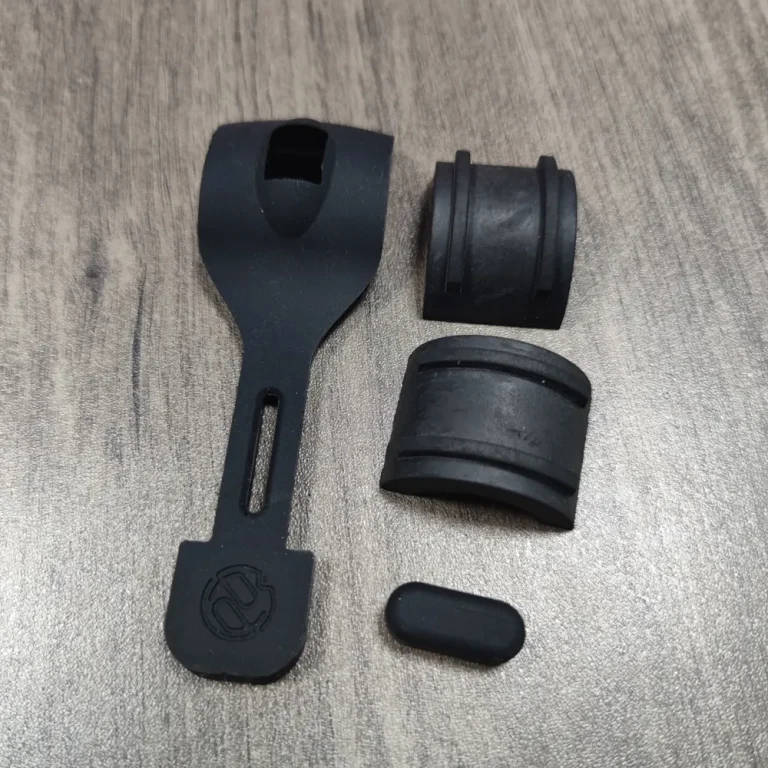
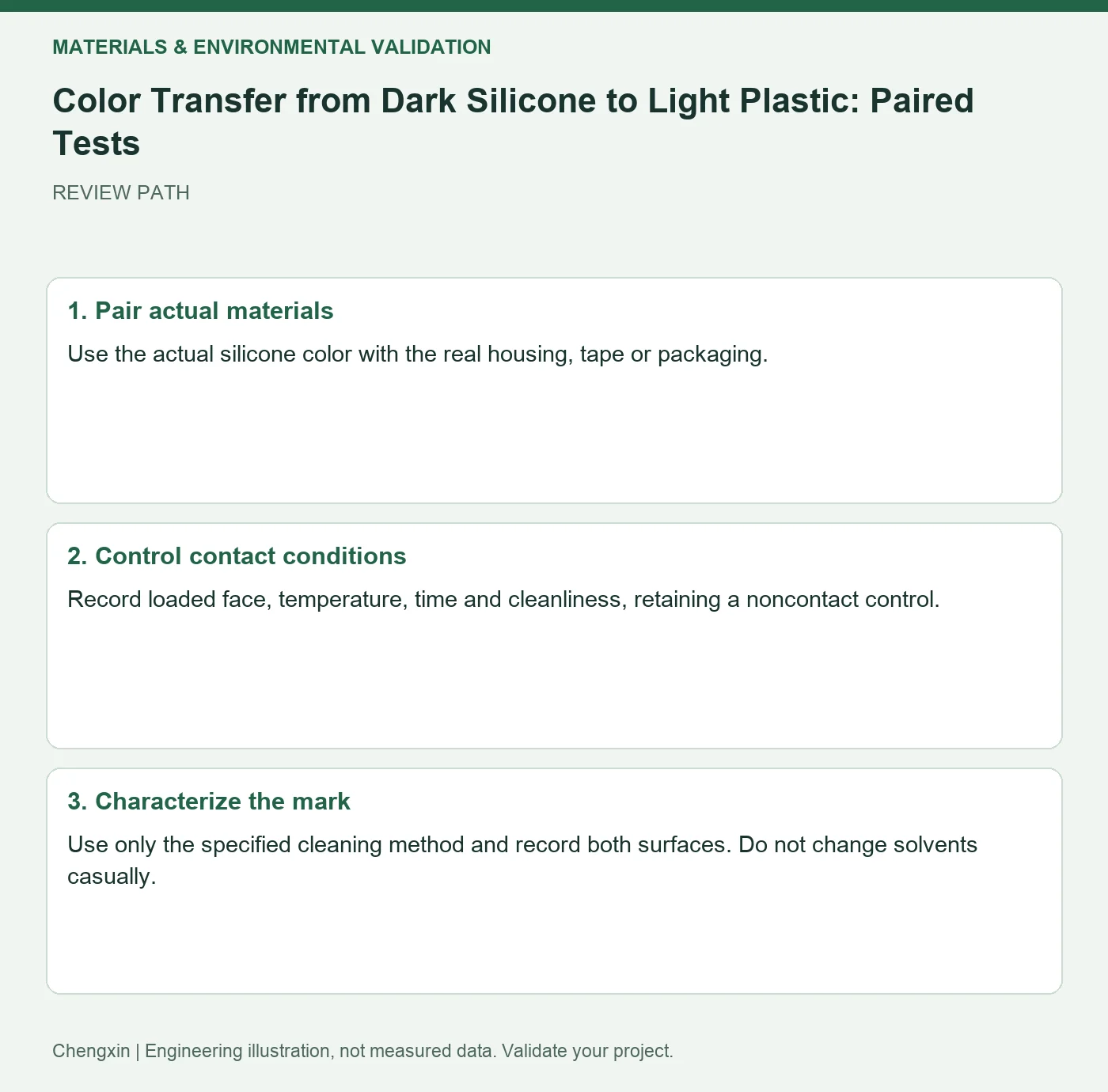
Turn the review into recorded checks
| Step | Action and evidence |
|---|---|
| 1 · Pair actual materials | Use the actual silicone color with the real housing, tape or packaging. |
| 2 · Control contact conditions | Record loaded face, temperature, time and cleanliness, retaining a noncontact control. |
| 3 · Characterize the mark | Use only the specified cleaning method and record both surfaces. Do not change solvents casually. |
A comparison to avoid misinterpretation
If one dark part marks only one of two light housing materials, investigate the material pairing before changing only the silicone color.
Frequently asked question
Does no visible rub-off rule out housing staining?
No. Brief rubbing differs from prolonged pressure contact.
Background and further reading
This note addresses one specific question. For broader concepts, see the related background guide.
Related question: Silicone Mass Gain After Immersion: Absorption or Residual Liquid?.
External references support the relevant concepts. The review steps and scenarios are independent engineering discussion guidance, not quotations from a standard or external organization. Use agreed methods, applicable document revisions and complete conditions.
Apply this to your custom part
Compare the structure with Custom Shaped Silicone Parts. Describe the application, geometry, operating conditions, quantity and problem to solve. Submit a custom-parts inquiry, or see how to send drawings and sample photographs by business email. Confirm material, dimensions, costs, testing and delivery requirements for the project.