Scope and common interpretation errors
For shaped-part molding reviews, without universal pressure, speed or cure settings.
Geometry affects flow and venting. Extra charge may increase thick-zone flash without addressing end-of-fill gas or resistance. Record material and mold temperature too.
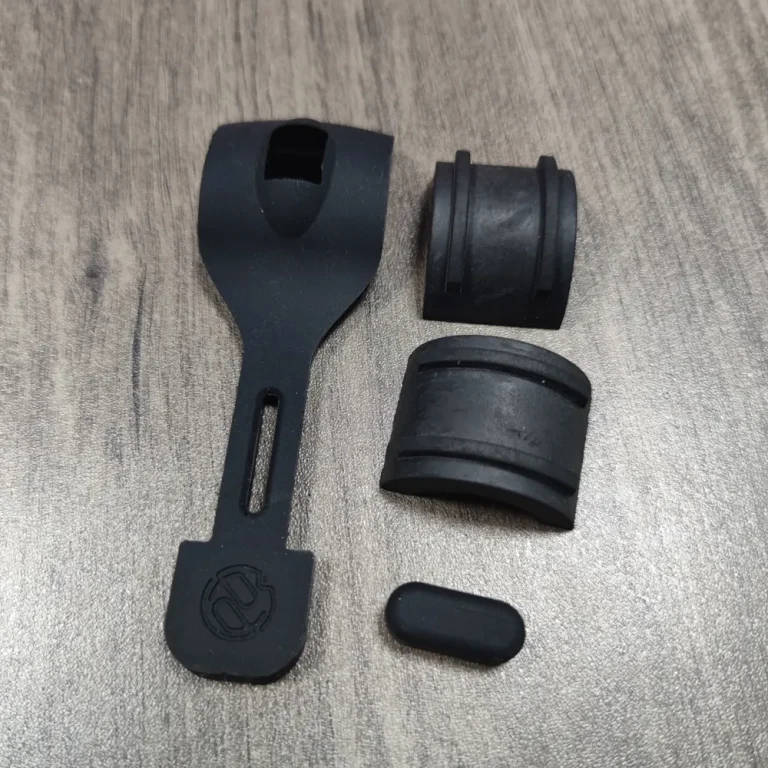
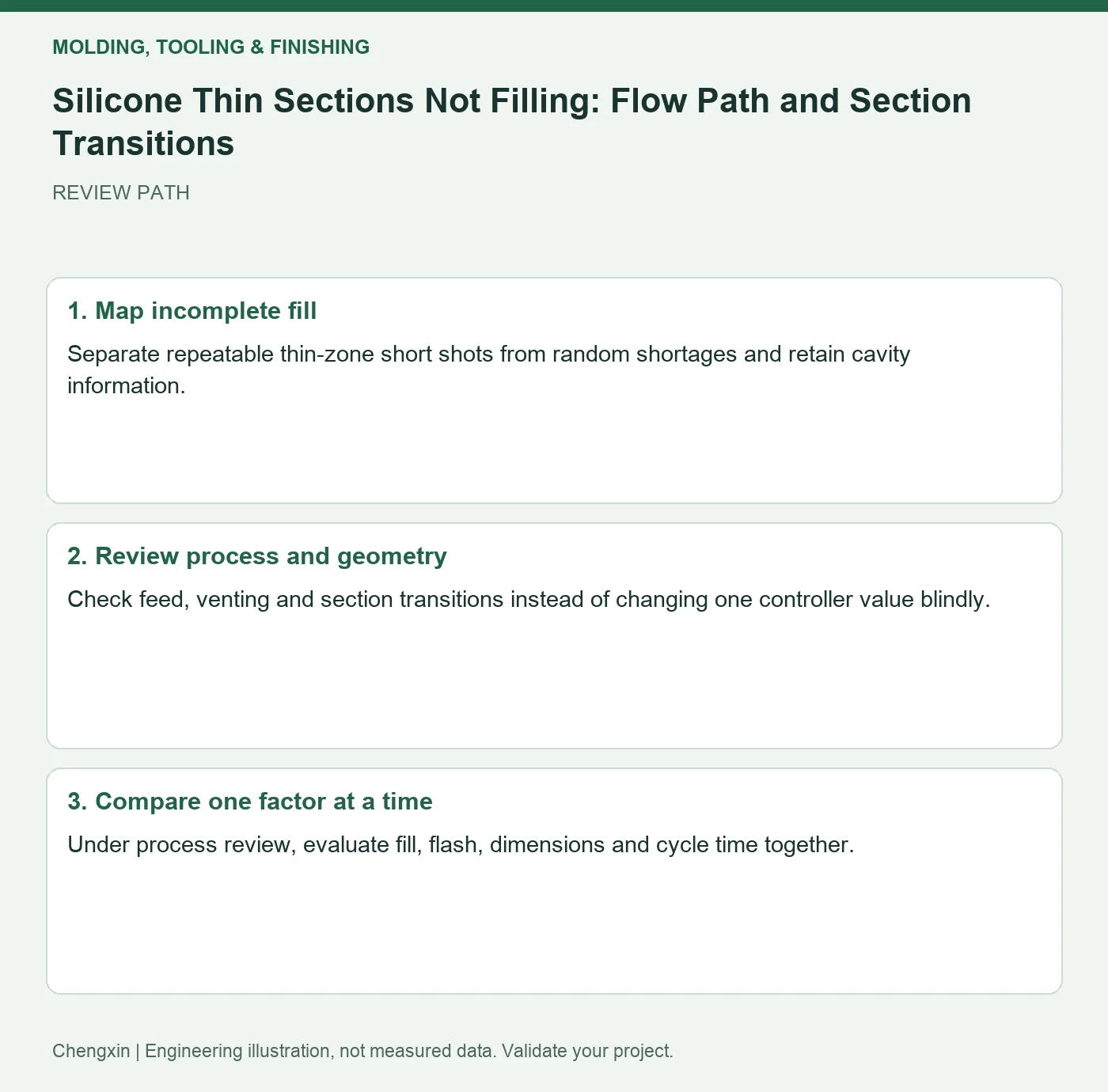
Turn the review into recorded checks
| Step | Action and evidence |
|---|---|
| 1 · Map incomplete fill | Separate repeatable thin-zone short shots from random shortages and retain cavity information. |
| 2 · Review process and geometry | Check feed, venting and section transitions instead of changing one controller value blindly. |
| 3 · Compare one factor at a time | Under process review, evaluate fill, flash, dimensions and cycle time together. |
A comparison to avoid misinterpretation
If more charge creates flash while the same thin zone remains incomplete, investigate flow and venting rather than accepting permanent extra trimming.
Frequently asked question
Will more pressure always fill the thin zone?
Tooling, compound and venting still limit the result.
Background and further reading
This note addresses one specific question. For broader concepts, see the related background guide.
Related question: Silicone Dimensions Before and After Post-Curing: Acceptance State.
External references support the relevant concepts. The review steps and scenarios are independent engineering discussion guidance, not quotations from a standard or external organization. Use agreed methods, applicable document revisions and complete conditions.
Apply this to your custom part
Compare the structure with Custom Shaped Silicone Parts. Describe the application, geometry, operating conditions, quantity and problem to solve. Submit a custom-parts inquiry, or see how to send drawings and sample photographs by business email. Confirm material, dimensions, costs, testing and delivery requirements for the project.