


Chengxin Silicone Rubber · Engineering and application insights
Keypads & Electronic Parts
Explore force–travel behavior, off-center pressing, return, conductive contacts, legends and backlighting in existing silicone keypad and button designs.
Browse by engineering question
Read the technical guidance, or discuss your drawings and operating conditions with us.
Submit Customization Request →



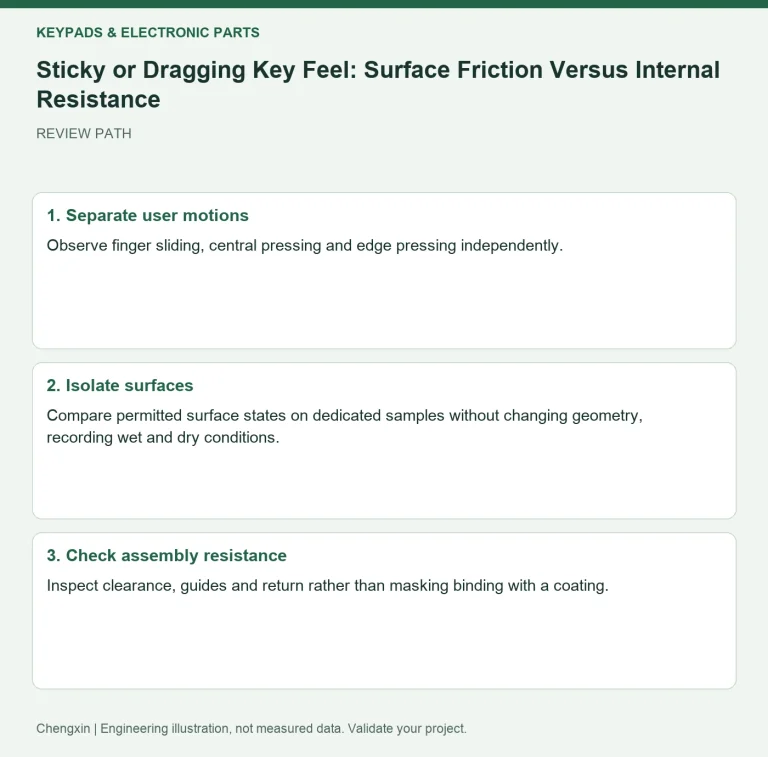
Sticky or Dragging Key Feel: Surface Friction Versus Internal Resistance
Separate finger-surface drag from resistance inside the moving button. Both may be described as poor feel, but require different measuremen…
Read the article →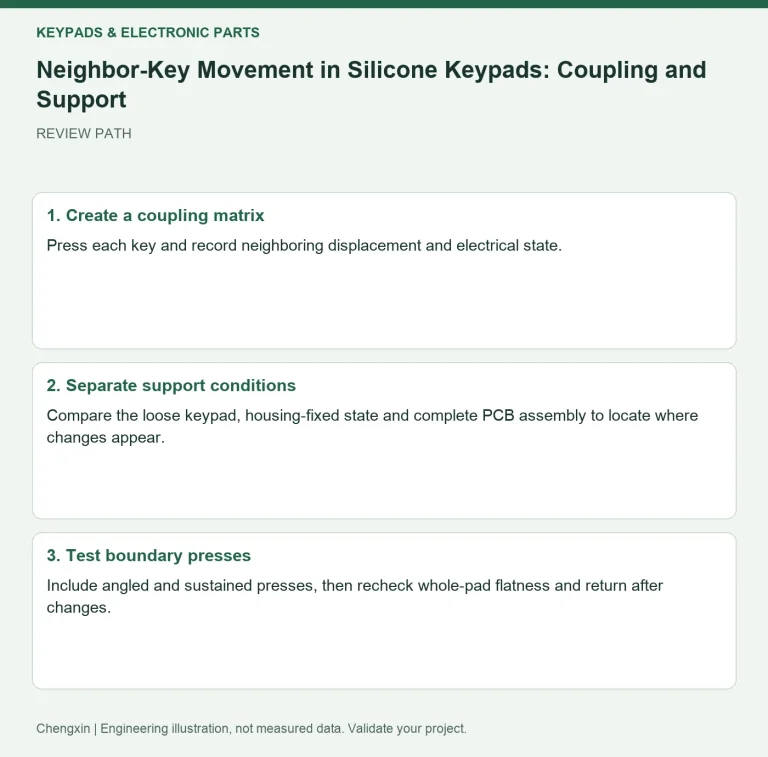
Neighbor-Key Movement in Silicone Keypads: Coupling and Support
Check neighboring displacement, actuation and appearance when pressing each key. A passing single-key curve does not establish that the ful…
Read the article →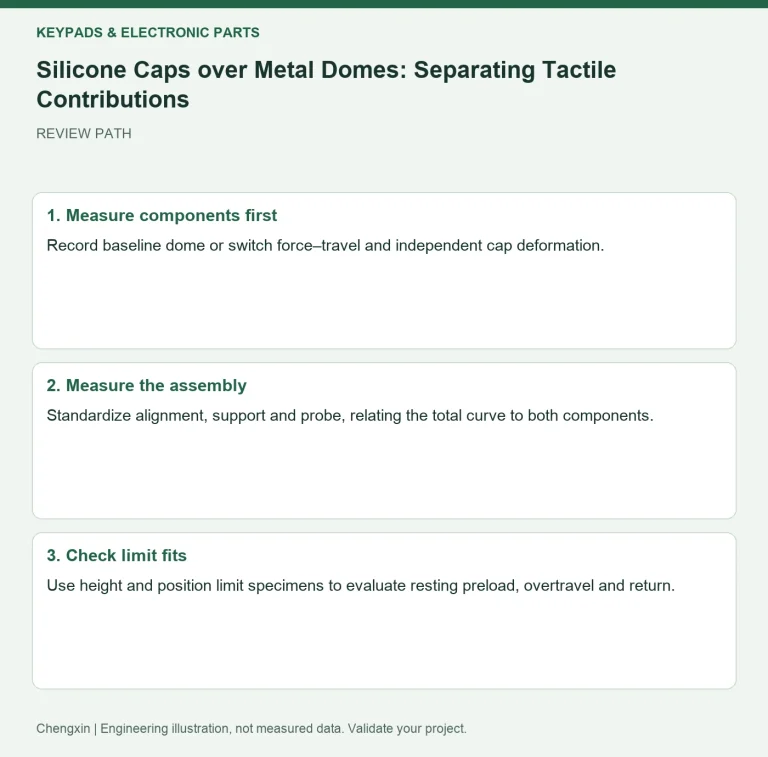
Silicone Caps over Metal Domes: Separating Tactile Contributions
Separate cap load transmission, dome response and assembly fit. Changing cap hardness alone may make two return mechanisms interact differe…
Read the article →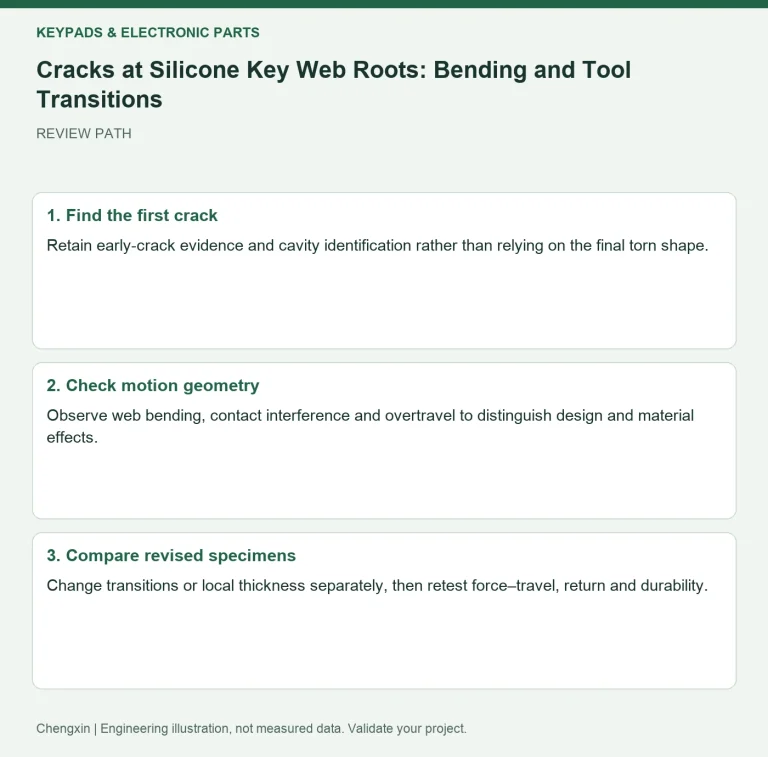
Cracks at Silicone Key Web Roots: Bending and Tool Transitions
Review crack initiation against motion, thickness transitions and molding condition. Greater bulk tensile strength may not solve repeated b…
Read the article →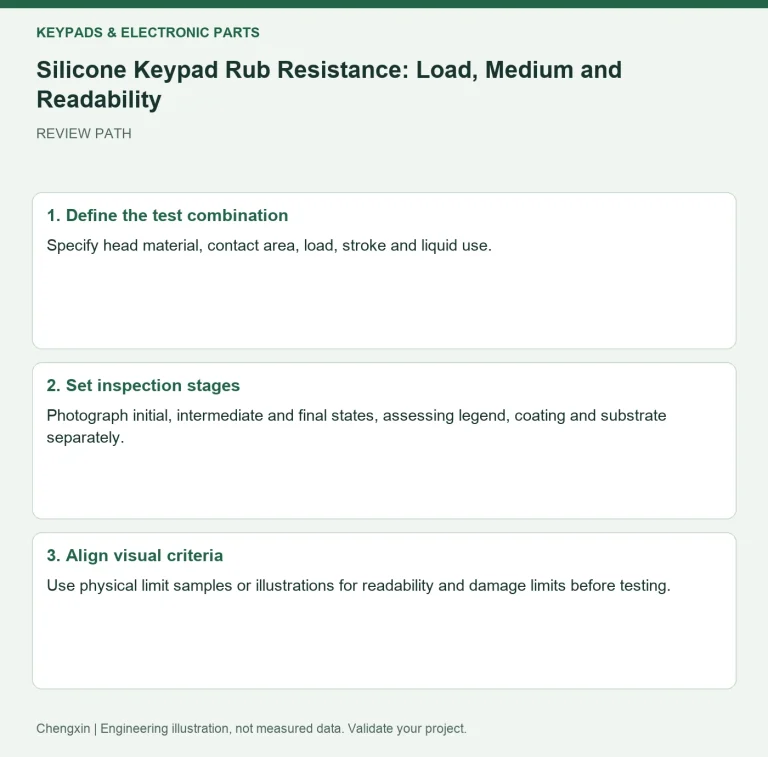
Silicone Keypad Rub Resistance: Load, Medium and Readability
State rubbing cycles with the head, medium, load, speed and acceptance criteria. Results from different methods are not directly comparable…
Read the article →