Define the folding motion
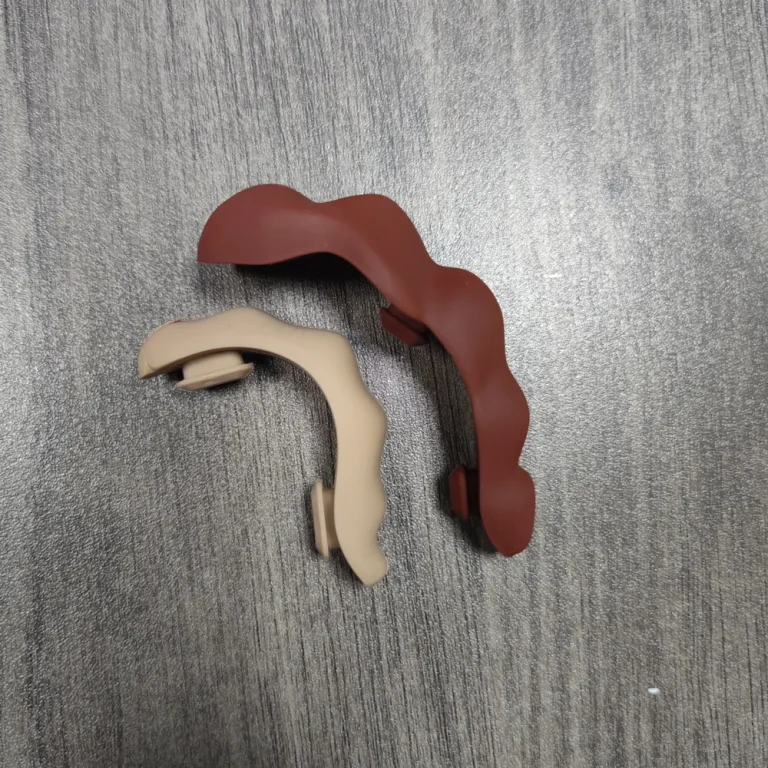
Draw open, intermediate and folded states, identifying repeated inversion and hard-part contact. The thinnest static section is not the only concern: transitions, insufficient radii and eccentric folding can concentrate strain. Location features and stops should encourage the intended motion.
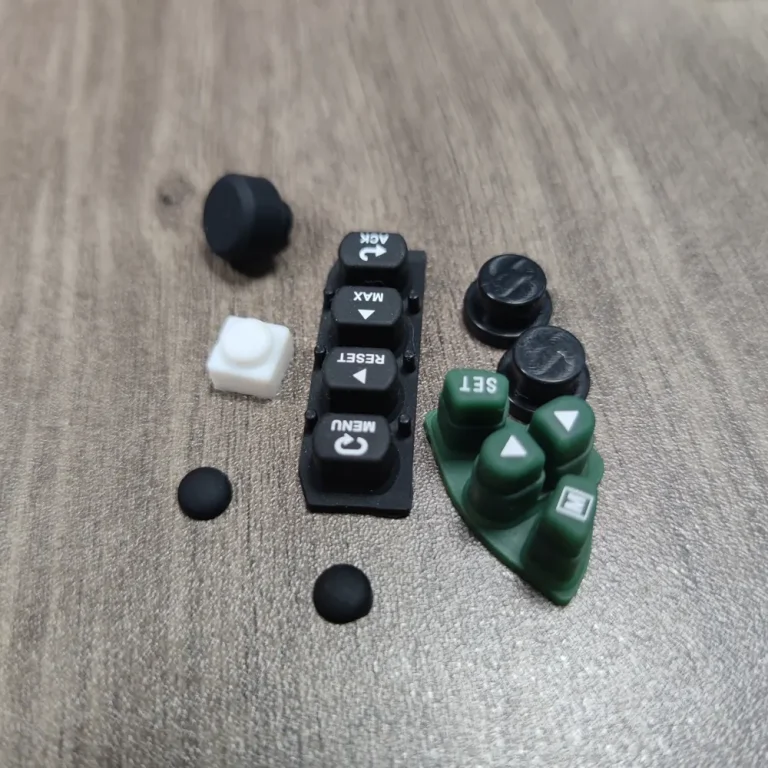
Keep manufacturing defects out of the flex zone
Review parting lines, gates and trimming so sharp notches do not lie in repeatedly stretched regions. Retain magnified first-off photographs to separate original defects from new service cracks. Coupon tear tests help screen compounds but cannot replace fatigue testing of the complex part.
Inspect intermediate cycle states
Define angle or displacement, speed, dwell, temperature and loading. At agreed intervals check cracks, whitening, permanent deformation and function, not only cycles to rupture. Where cleaning or media exposure occurs, assess their combination with folding.
Project review checklist
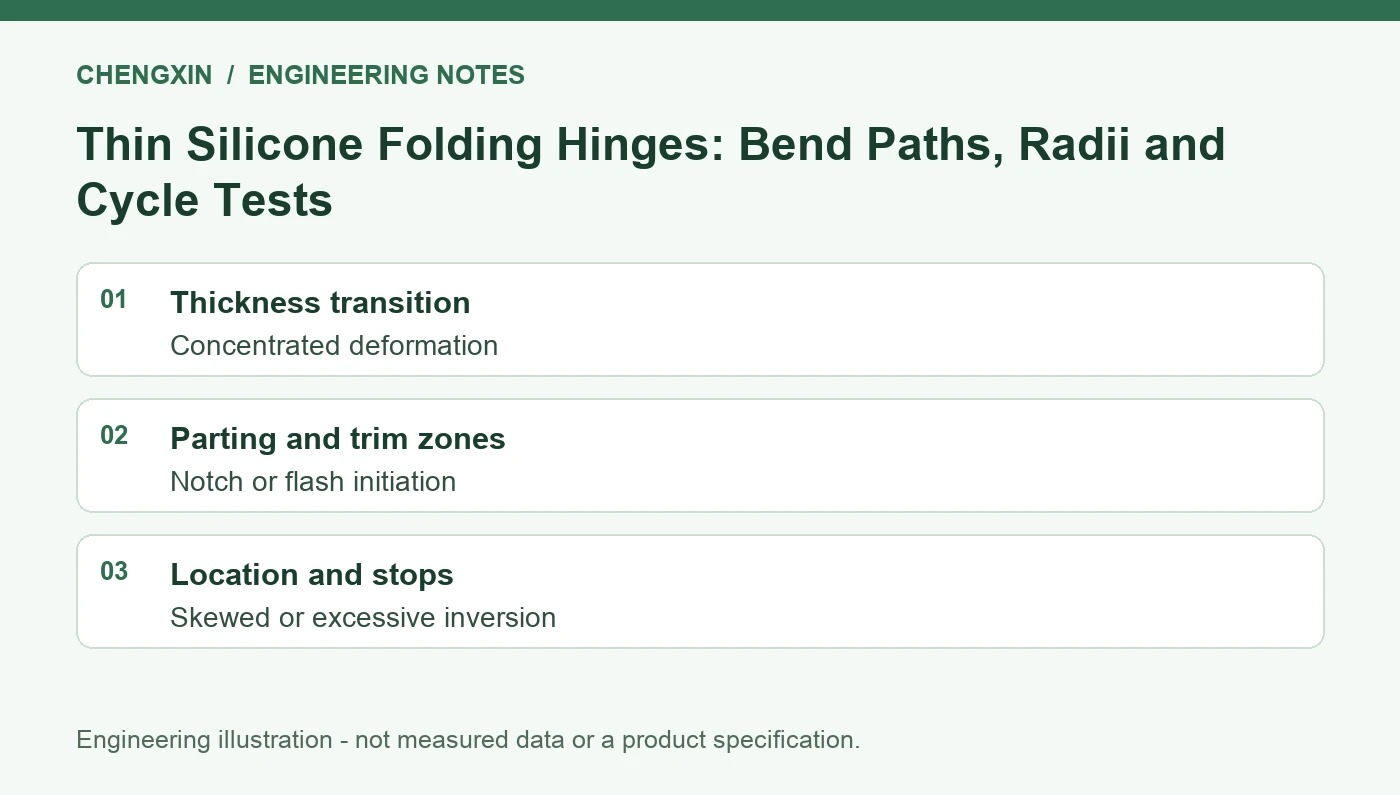
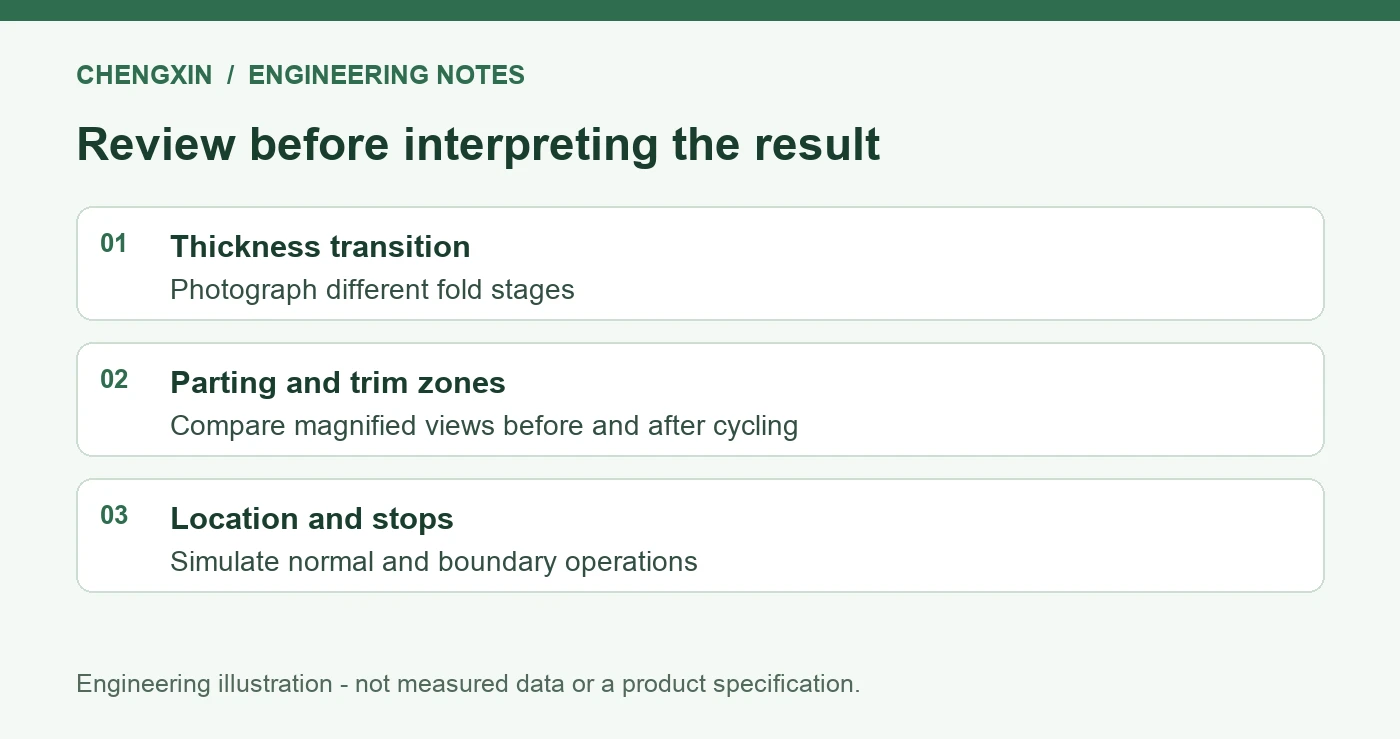
| Design region | Observation | Validation action |
|---|---|---|
| Thickness transition | Concentrated deformation | Photograph different fold stages |
| Parting and trim zones | Notch or flash initiation | Compare magnified views before and after cycling |
| Location and stops | Skewed or excessive inversion | Simulate normal and boundary operations |
Illustrative project example
If one side of a folding container cracks early, compare geometry, trimming and motion on both sides. A stronger formulation may conceal a structural issue; use controlled comparisons before choosing a correction.
Frequently asked questions
Is a thinner hinge always more durable?
No. Thickness affects bending force and local strain together with support and radii.
Can one fixed cycle count describe every product's life?
No. Tie cycles to specific motions, environments and project acceptance requirements.
Related product and project inquiry
Custom Silicone Single-Key Button Caps · Cracks at Silicone Key Web Roots: Bending and Tool Transitions
For a custom part review, send the drawing, application, material or performance needs, key dimensions, quantity and target test conditions. Material, tooling and acceptance requirements are confirmed for each project.