
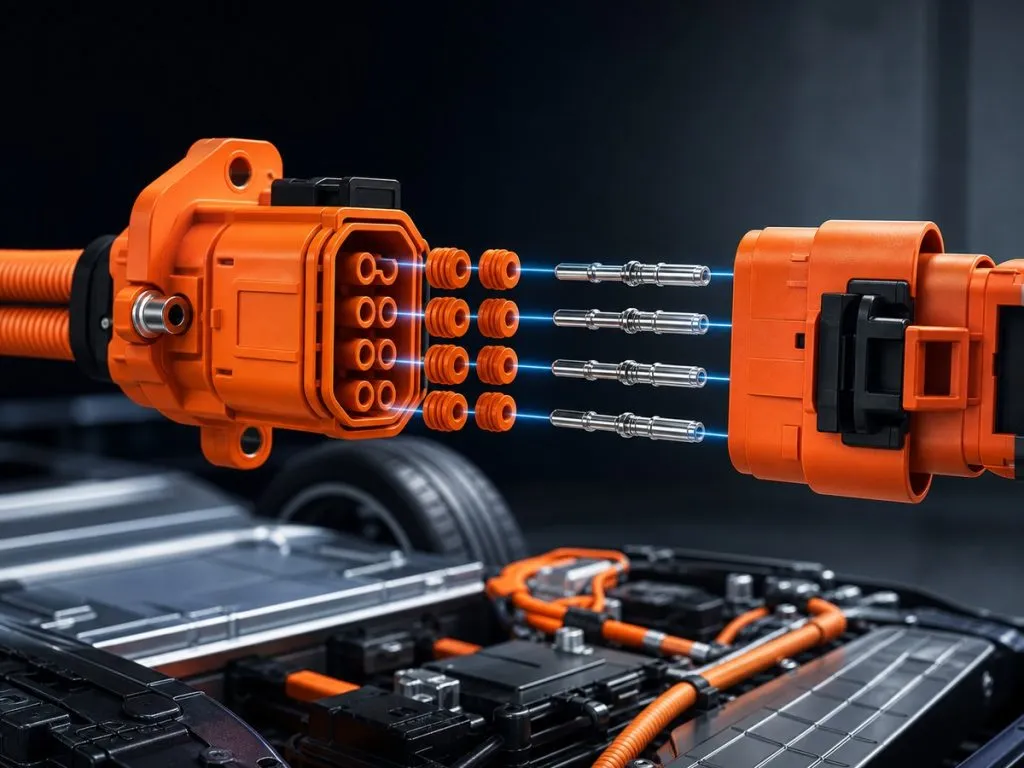
The seals in high-voltage connectors for new energy vehicles must withstand repeated mating and unmating, vibration, temperature fluctuations, and moisture; therefore, the fit between the terminal holes and the housing must be designed as a single integrated unit.
1. Sealing Location
The terminal holes and the housing seal are subjected to different forces.
- Distinguishing Between Static and Dynamic Zones
- Defining the Compression Ratio
- Drawing a Tolerance Chain
2. Effects of Plugging and Unplugging
A balance must be struck between insertion force and seal reliability.
- Prevent the seal from flipping over
- Controlling Surface Friction
- Protect the edges of the terminal holes
3. Material Requirements
Low-temperature rebound and thermal aging affect long-term performance.
- Confirm Temperature Range
- Verify Media Compatibility
- Controlling Burr Particles
4. System Verification
Verify performance in a real connector.
- Plug-and-Unplug Cycles
- Air Tightness or Water Immersion Test
- Retest After Vibration
FAQ
1. Is water leakage from terminal holes caused solely by the rubber gasket?
It is also related to hole diameter tolerances, terminal positioning, and assembly misalignment.
2. Can lubricant be used on connectors?
Its use can be evaluated, but the long-term effects on electrical performance and sealing must be verified.